

Amla Capsules Explained: Benefits, Vitamin C, Hair Growth, Safety & Side Effects

Key Takeaways
- Amla capsules concentrated Indian gooseberry for daily antioxidant and immunity support.
- Roughly 10–20x an orange’s vitamin C in fresh fruit capsule content varies by brand.
- Early research links amla to healthier hair, skin, blood sugar and digestion.
- Possible interaction with blood thinners, diabetes medicine and blood pressure medicine.
- FSSAI certification and clear labelling matter more than the highest milligram count.
Amla capsules are dietary supplements made from concentrated Indian gooseberry (Phyllanthus emblica). Research suggests they may support antioxidant intake, immune function, healthy hair and skin, and overall wellness. For most healthy Indian adults, follow the dosage on the product label and consult a healthcare professional before use if you take medication or have a medical condition.
Every wellness blog will tell you amla has more vitamin C than an orange. Almost none of them tell you whether that vitamin C survives the journey into the amla capsules sitting on your kitchen shelf. That gap between the fruit’s reputation and what’s actually inside your bottle is where this guide starts.
Amla, or Indian gooseberry, has been part of Ayurvedic wellness for centuries, usually eaten fresh, pickled, or turned into murabba during its short winter season. But fresh amla isn’t always around, and chewing on something this sour isn’t for everyone. That’s why more people especially in cities like Mumbai, Bengaluru and Delhi have started reaching for amla capsules instead: same fruit, none of the sourness, a routine you can actually stick to.
At Pure Nutrition, we get asked about amla constantly, usually alongside questions about immunity, hair fall and gut health. So this guide covers what the research actually says the real benefits, the honest limitations, who should be cautious, and how much vitamin C you’re genuinely getting. By the end, you’ll know exactly what a good amla capsule should offer, how to take it safely, and what to check on the label before you buy one.
What Are Amla Capsules?
Amla capsules are simply amla scientifically Phyllanthus emblica, also called Indian gooseberry dried, powdered or extracted, and packed into an easy-to-swallow capsule. Nothing exotic. Just a familiar Ayurvedic fruit in a format that fits a Monday morning routine.
The fruit itself is small, pale green, and famously sour sour enough that most people can’t eat more than one or two at a time. What makes it worth the trouble is what’s inside: a dense concentration of vitamin C, along with plant compounds like gallic acid, ellagic acid, emblicanin A and B, and hydrolysable tannins that together give amla one of the highest antioxidant capacities of any commonly eaten fruit.
Here’s where it gets interesting: amla’s tannins are believed to bind to its vitamin C and slow how quickly it breaks down, even when the fruit is dried or processed. That’s part of why amla powder and amla extract capsules can retain meaningful vitamin C, unlike most fruits, where drying or cooking destroys much of it.
Two broad types dominate the Indian gooseberry capsules market: whole-fruit powder capsules, made from dried, ground amla, and standardised extract capsules, concentrated to guarantee a specific level of active compounds batch after batch. For most Indians, amla capsules exist for one practical reason fresh amla is seasonal and sour, and a capsule solves that without asking you to change your morning chai routine.
Why Amla Is a Nutritional Powerhouse
Vitamin C gets all the attention, but it’s not the whole story. Amla’s real strength is the combination vitamin C working alongside a dense network of polyphenols that most single-nutrient supplements simply don’t have.
Gallic acid and ellagic acid, two of amla’s most-studied compounds, are potent antioxidants in their own right. Emblicanin A and B compounds fairly unique to amla are thought to be part of why its antioxidant activity holds up even after the fruit is dried or extracted, something plain ascorbic acid struggles to do on its own.
Why does antioxidant activity matter in the first place? Every day, normal bodily processes digestion, exercise, even breathing polluted city air generate free radicals, unstable molecules that can damage cells over time. This is oxidative stress, and it’s linked to everything from visible skin ageing to long-term heart and metabolic health. Antioxidants like the ones in amla help the body manage some of that everyday load.
One evidence note worth flagging: not all amla capsules are created equal. How the fruit is dried, extracted and standardised significantly affects how much vitamin C and how many active polyphenols actually make it into the final capsule. A poorly processed amla powder can lose a large share of its original vitamin C before it ever reaches your bottle which is exactly why the brand and processing method behind your FSSAI-regulated amla supplement purchase actually matters.
Key Benefits of Amla Capsules: What Research Suggests
Research on amla covers a genuinely wide range from clinical trials on blood sugar to lab studies on skin cells. Here’s what actually holds up, benefit by benefit.
May Support Immune Health
Amla’s biggest claim to fame is immune support, and it’s not just folklore. A high vitamin C intake is well-established as important for normal immune cell function, and amla remains one of the most concentrated natural sources of it genuinely useful through monsoon colds and Delhi’s winter smog if your fresh fruit intake is low. Research on Phyllanthus emblica, indexed on PubMed, points to immune-modulating effects beyond vitamin C alone, likely from its polyphenol content. Still, no capsule replaces sleep and a reasonably balanced diet amla supports natural immunity, it doesn’t substitute for the basics.
May Support Hair Growth and Strength
Amla has a genuine research base here, more than most hair supplements can say. A randomised, placebo-controlled trial on an oral amla product indexed on PubMed, 2023 found measurable improvements in hair growth markers among women with pattern hair thinning after twelve weeks, versus placebo. Researchers believe amla may work by increasing follicle size and extending the hair’s growth phase, alongside reducing scalp oxidative stress relevant given how much Mumbai or Chennai’s heat, humidity and hard water are blamed for hair fall. Worth flagging: this was one trial with a modest sample (around 60 women), and amla capsules are not a hair, skin and nails cure for severe or patterned baldness think nutritional support, not a fix.
May Support Skin Health
Amla’s role in skin health comes largely from the same antioxidant compounds that protect it as a fruit. Laboratory research on Phyllanthus emblica extract has shown it can help protect skin cells from UVB-related oxidative stress in lab-based models relevant given how much sun exposure daily commuting involves across most of India. Vitamin C also plays a documented role in collagen synthesis, the protein behind skin’s structure and elasticity. This evidence sits mostly at the cellular and lab level rather than large human trials, so treat amla as one piece of a broader skincare and sun-protection routine, not a replacement for either.
May Support Healthy Blood Sugar
Some of the more rigorous amla research comes from diabetes studies, not beauty claims. In one Indian clinical trial, standardised amla extract was compared against a low dose of metformin over three months, with the amla group showing slightly greater reductions in fasting and post-meal blood sugar. Research suggests this may relate to amla’s polyphenol and fibre content relevant given the ICMR-INDIAB study (2023) estimates 11.4% of Indian adults live with diabetes. Important: this is one trial, amla is not a substitute for prescribed medication, and anyone on blood sugar medication should only add it under medical supervision, since the combined effect could push glucose too low.
Antioxidant Support
Every benefit above circles back to one mechanism: antioxidant protection. Amla ranks among the highest-scoring fruits tested for ORAC (oxygen radical absorbance capacity), a lab measure of how well a food neutralises free radicals. With outdoor pollution and long working hours the norm in most Indian cities think Delhi’s AQI spikes every winter a diet naturally richer in antioxidants is a reasonable, low-risk addition for healthy adults. The honest caveat: lab-measured antioxidant capacity doesn’t always translate to one measurable outcome in the body, so treat amla as a contributor to healthy ageing, not a guaranteed fix.
Digestive Wellness
Amla has been used as a mild digestive tonic in Ayurveda for centuries, and modern evidence gives at least partial support to that reputation. Its fibre supports regular bowel movement, while some research suggests it may help support a healthy gut lining and microbial balance useful given how erratic meal timing and heavy festival eating are across urban Indian diets. Formulation matters here too: amla combined with probiotics, like Lactobacillus strains, can support gut health more directly than amla alone, since probiotics work on gut flora while amla contributes fibre and antioxidants.
How Much Vitamin C Is in Amla Capsules Compared to Oranges?
Fresh amla is often cited as containing ten to twenty times more vitamin C than an orange, gram for gram and depending on the variety, ripeness and testing method, that’s a reasonably defensible claim. According to India’s ICMR Indian Food Composition Tables (2017), fresh amla provides roughly 600 mg of vitamin C per 100 g, compared to around 40–53 mg per 100 g in oranges.
Fresh-fruit comparison, ICMR Indian Food Composition Tables (2017). Amla capsule content depends on formulation and processing see note below.
But here’s the catch almost every amla capsules article skips: that number describes the fresh fruit, not necessarily what’s inside your capsule. Vitamin C is sensitive to heat, air and processing time, and while amla’s natural tannins do help protect it better than most fruits, drying and extraction still cause some loss. A capsule made from poorly dried, low-quality amla powder can contain meaningfully less vitamin C than the fresh-fruit figure suggests while a well-standardised extract, tested for guaranteed potency, can retain a strong dose.
| Source | Approx. Vitamin C (per 100g) | Notes |
|---|---|---|
| Fresh amla | ~500–700 mg | Varies by variety, ripeness and region |
| Orange | ~40–53 mg | Commonly cited reference value |
| Amla capsule / extract | Varies by formulation | Depends on processing and standardisation |
The real takeaway: don’t assume your capsule matches the fresh-fruit number you read online. Always check the supplement facts panel on the actual bottle, and if a brand doesn’t disclose standardisation or vitamin C content clearly, that’s a reasonable sign to look elsewhere for your natural vitamin C supplement.
Who Should Consider Taking Amla Capsules?
Amla capsules tend to suit people who want the fruit’s benefits without the hassle of sourcing or eating it fresh. None of this makes them mandatory they’re a convenient top-up, not a requirement, especially if you already eat citrus fruits, guava or other vitamin C-rich produce regularly. That's especially true for women's wellness supplements routines, where amla is often paired with iron or hair-focused nutrients.
Good Fit For
- Office professionals with long, sedentary days and inconsistent fruit intake
- Busy parents who rarely get around to eating enough fresh produce themselves
- Vegetarians and vegans wanting a plant-based antioxidant and vitamin C source
- Frequent travellers whose diets go inconsistent on the road
Talk to a Doctor First
- Pregnant or breastfeeding safety data at supplement doses is limited
- Scheduled for surgery possible increased bleeding risk
- Taking blood-thinning medication such as warfarin or aspirin
- On diabetes or blood pressure medication, since amla may add to their effect
- Considering it for a child, unless a paediatrician has specifically advised it
This isn’t meant to scare you off amla capsules most healthy adults tolerate them well. It’s simply that “natural” doesn’t automatically mean “risk-free,” especially once medication is involved.
Dosage, Timing & Best Way to Take Amla Capsules
There’s no single “correct” amla capsule dosage that applies to every product it genuinely depends on the formulation. Most commercial amla extract capsules in India are dosed between 500 mg and 1,000 mg per day, usually split into one or two capsules taken after meals, which is also the range most clinical research has used.
Here’s the most common mistake Indians make with amla capsules: doubling up because “more vitamin C is better,” or skipping days and trying to catch up later with a bigger dose. Neither works well amla, like most water-soluble vitamin C sources, isn’t stored heavily in the body, so consistency matters more than any single large dose. Morning versus evening is less important than people assume; what actually matters is picking a time you’ll realistically repeat every day, ideally with a proper meal rather than an empty stomach if you’re prone to acidity.
| Form | Typical Use | Best Timing | Notes |
|---|---|---|---|
| Capsule | Daily | After breakfast or a meal | Easiest to build into a routine |
| Powder | Daily | Mixed with water | Taste is noticeably stronger and sour |
| Juice | Morning | Often on an empty stomach | Sugar content varies by brand |
| Fresh fruit | Seasonal | Anytime, ideally with meals | Highly perishable, short season |
If you’re combining amla capsules with a broader routine a balanced diet, other fruits, adequate protein that’s genuinely the best way to get value from any supplement. What to avoid: pairing high-dose amla with alcohol, or stacking it with several other high-dose supplements without professional guidance, since interactions can add up in ways that are hard to predict on your own.
When in doubt, start with the lower end of the range and assess after 4 weeks.
Pure Nutrition Expert Take
We’ll be upfront about something most brand blogs won’t admit: not every amla product needs to be or should be a single-ingredient, mega-dose capsule.
In our experience formulating for Indian customers, the people who actually stick with amla long enough to notice a difference are the ones who build it into a routine that already works for them, not the ones chasing the highest milligram count on a label. Looking through hundreds of customer reviews on our own cranberry-amla formula, one pattern stands out clearly: people who take it consistently after a meal, twice a day, report sticking with it far longer than people who try to remember it on an empty stomach.
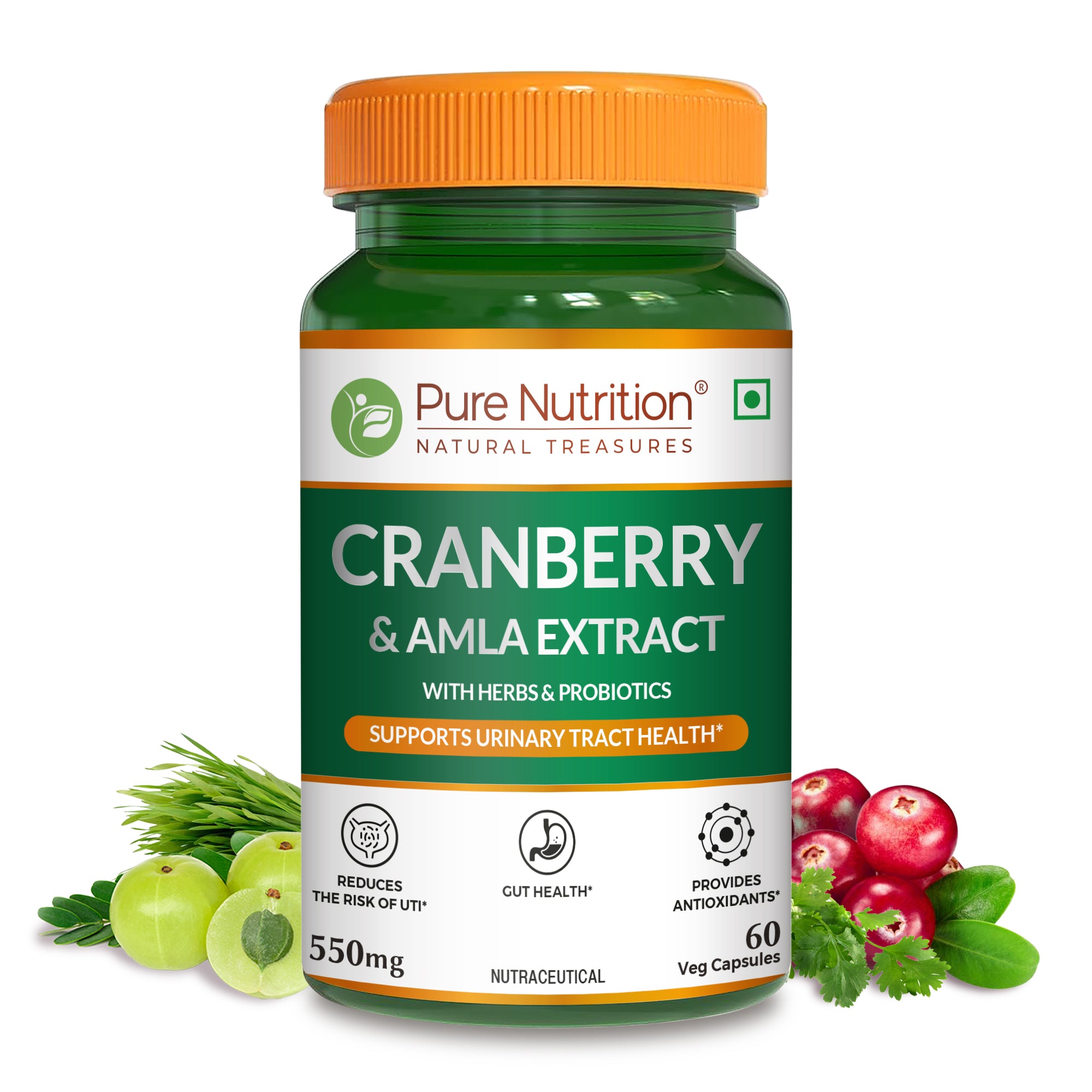
That consistency angle is exactly why we didn’t launch amla as a standalone capsule. Our Cranberry, Amla, Herbs & Probiotics Capsules combine amla extract with cranberry, coriander, vetiver and the probiotic Lactobacillus plantarum, in one capsule taken twice daily after meals built for people who want amla’s antioxidant and immunity support alongside urinary tract and gut health benefits, without juggling three different bottles. No exaggerated claims here: it’s a well-rounded formula, not a miracle cure. If that combination fits what you’re looking for, the full ingredient list and directions are on the product page below.
Amla Capsules vs Fresh Amla vs Juice vs Powder
Every form of amla has its place the right one depends on your lifestyle more than any inherent superiority of one over another.
Capsules win on convenience: no sourcing, no sour aftertaste, easy to travel with, and a standardised dose if you buy from a brand that tests for it. Fresh amla wins on being a true whole food, delivering fibre and nutrients exactly as nature packaged them but it’s only available for a few months a year and spoils quickly. Juice sits in between: quick to drink, but added sugar and dilution mean vitamin C content varies enormously between brands, so check the label rather than assuming. Powder is flexible for smoothies and cooking, though its sharp sourness isn’t for everyone, and like juice, potency depends heavily on how it was dried and stored.
| Form | Convenience | Vitamin C | Cost (approx./month) | Shelf Life | Best For |
|---|---|---|---|---|---|
| Capsules | High | Standardised (check label) | ₹400–₹900 | Long (12–24 months) | Busy adults, daily routine |
| Fresh fruit | Low–Medium | Naturally high | ₹150–₹400 (in season) | Days (seasonal only) | Whole-food purists |
| Juice | Medium | Variable | ₹300–₹600 | Short once opened | Those who prefer drinking it |
| Powder | Medium | Variable | ₹200–₹500 | Long (12+ months) | Smoothies, cooking, DIY use |
Approximate Indian market price ranges for a month’s supply, not exact Pure Nutrition pricing.
None of these is objectively “best.” If you already eat fresh amla every winter and enjoy it, there’s no strong reason to switch. But if your fresh-amla habit has quietly stopped happening which, honestly, it does for most people by February a capsule is usually the easiest way back in.
Common Mistakes Indians Make with Amla Capsules
- Skipping doses, then doubling up later. Consistency beats intensity with amla a missed day isn’t a big deal, but treating it like a balance you can top up later isn’t how water-soluble vitamins work.
- Expecting overnight hair or skin transformation. Amla supports hair and skin health over weeks and months, not days. If a product promises visible results within a week, that’s a claim worth questioning.
- Ignoring medicine interactions. This is the one that genuinely matters assuming a “natural” supplement can’t interact with blood thinners, diabetes medication or blood pressure drugs is a common and avoidable mistake.
- Buying poor-quality or unlabelled supplements. Loose amla powder from an untrustworthy source, with no FSSAI certification or clear standardisation, is a gamble on both potency and safety.
- Confusing amla juice with standardised capsules. They aren’t interchangeable juice often has added sugar and inconsistent vitamin C, while a capsule from a credible brand should be more predictable.
- Assuming more is automatically better. Higher doses don’t multiply the benefit and can increase the odds of an upset stomach.
A few very India-specific patterns are worth calling out too: forgetting amla capsules entirely during heavy festival eating seasons like Diwali, when digestion needs support the most; treating amla capsules and evening chai as interchangeable digestive aids, when they serve different purposes; and stocking up on fresh amla in winter with good intentions, only for the routine to quietly disappear by the time office deadlines pick up again in February and March.
Frequently Asked Questions
Amla capsules are commonly used for antioxidant intake, immunity, and a convenient daily dose of vitamin C, alongside support for hair, skin and digestion. They’re taken as a daily supplement, not a medicine a simpler alternative to eating sour fresh amla or seasonal juice.
Amla may support healthier hair growth conditions by reducing scalp oxidative stress, with early clinical research showing modest improvement in hair growth measures over 12 weeks. For skin, its antioxidants and vitamin C support collagen production a supportive addition, not a guaranteed fix for hair loss or skin conditions.
Fresh amla contains roughly 500–700 mg of vitamin C per 100g, versus about 40–53 mg per 100g in oranges, per India’s ICMR food composition data. Capsule content depends on processing and standardisation, though, so it won’t automatically match the fresh-fruit figure always check your product’s supplement facts panel.
Most healthy adults tolerate amla capsules well, though some experience mild acidity, bloating or loose stools, especially at higher doses. It can also slightly raise bleeding risk and lower blood sugar more than expected in people on diabetes medication. Taking it with food and starting low usually helps.
Amla has a mild blood-pressure-lowering effect of its own, so combining it with BP medication could lower it more than intended. This isn’t a reason to panic, but tell your doctor you’re taking it, especially if you get dizzy or have low blood pressure episodes.
Many people with diabetes take amla, and research suggests it may modestly support blood sugar levels alongside standard treatment. Because it can lower blood sugar further, combining it with diabetes medication needs medical supervision monitor your levels closely when you start.
For some people, yes amla is naturally acidic and can cause mild acidity or loose stools, especially on an empty stomach or at a high dose. Taking it after a meal usually reduces this considerably; if it continues past a week or two, lower the dose or check with a doctor.
Yes most guidance recommends stopping amla at least two weeks before scheduled surgery, due to its mild blood-thinning, antiplatelet effect. Always tell your surgeon and anaesthesiologist about any supplements you’re taking, well before the date.
Yes, amla capsules are meant for daily use, and consistency matters more than dose size for seeing any benefit. Most people take one to two capsules daily after meals, per the product label confirm with your doctor first if you’re on regular medication.
Most people who notice a difference report it after four to eight weeks of consistent use, not days. If you see nothing after eight to twelve weeks, it’s more sensible to reassess your product or routine than to increase the dose.
Yes, generally amla itself is a fruit-based ingredient. The capsule shell is what to check: gelatin shells aren’t vegetarian, so look for “veg capsule” or HPMC on the label if that matters to you.
In most cases, yes amla mainly adds vitamin C and plant antioxidants, so it layers fine with a standard multivitamin. Just watch your total daily vitamin C if your multivitamin already runs high, and check with a nutritionist if you’re unsure.
Neither is objectively better. Fresh amla gives you the whole fruit with fibre intact; capsules offer convenience and a standardised dose year-round. If your fresh-amla habit doesn’t survive past winter, a quality capsule is the practical way to stay consistent.
For most healthy adults, standard-dose amla capsules appear reasonably well tolerated long-term, based on traditional and research use. Safety data at high supplement doses is still more limited than for the fresh fruit, so periodic doctor check-ins are sensible if you’re on medication.
The “best” one comes down to a few checkable things: FSSAI certification, transparent vitamin C or standardisation labelling, GMP manufacturing and genuine reviews not the highest advertised milligram count. If you want targeted benefits like gut or urinary health too, a combination formula may suit you better.
Amla capsules are best avoided, or used only under medical supervision, by pregnant or breastfeeding women, anyone scheduled for surgery within two weeks, and people on blood-thinning, diabetes or blood pressure medication. Children shouldn’t take them unless a paediatrician has specifically advised it.
Conclusion
If you’ve made it this far, you already know more about amla capsules than most people who take them daily the vitamin C nuance, the medicine interactions, and the real difference between fresh fruit and what’s actually inside a standardised capsule. The single most important thing to remember is this: amla capsules are a genuinely useful, research-backed addition to a daily routine, but they work best paired with a reasonably balanced diet, realistic expectations, and a quick check with your doctor if you’re pregnant, scheduled for surgery, or on regular medication. From here, the next step is simple check the label on whatever amla product you’re considering, confirm it’s FSSAI-certified with clear standardisation, and start at a sensible dose you’ll actually stick with.
In Short
- Amla capsules provide concentrated Indian gooseberry (Phyllanthus emblica) in a convenient, standardised daily format.
- Research suggests they may support antioxidant intake, immune health, and healthy hair, skin and digestion.
- Most healthy adults tolerate amla capsules well, but they can interact with blood thinners, diabetes medication and blood pressure medication.
- Choosing an FSSAI-certified, clearly labelled supplement and taking it consistently matters more than chasing the highest dose.
Ready to Try Amla, the Pure Nutrition Way?
Cranberry, Amla, Herbs & Probiotics one daily capsule for antioxidant, urinary and gut health support.
Shop Now →
