Choose Your Whey Protein
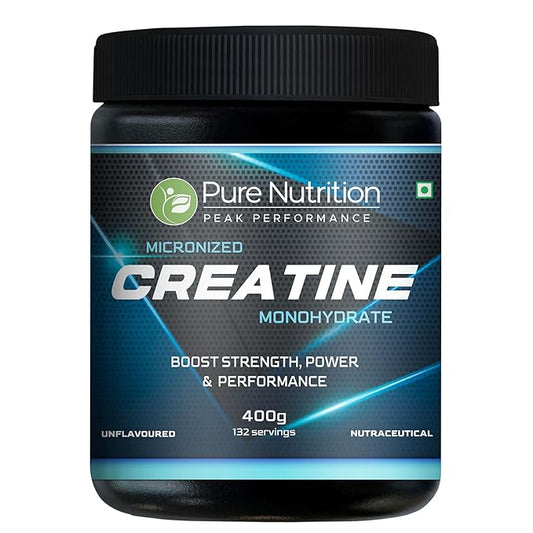
Every whey product here is a blend of whey protein concentrate and whey protein isolate. What separates them is practical: flavour, pack size, and whether creatine is included. Cafe Mocha and Kulfi come in 500 g and 1 kg packs, Chocolate in a 2 kg pack, and the Strength Combo pairs the whey blend with Pure Nutrition Micronized Creatine Monohydrate.
When you compare, look past the headline price. Check the serving size, the protein per serving and the price per serving. The buying guide further down shows how. Prices and offers change, so the cards below always show the current figures.
Which Whey Protein Is Right for You?
Nobody needs "the best" whey. What matters is which trade-offs suit you. Use this table as a starting point. It shows what is worth considering, not what you must buy.
| Your priority | What to consider | In this collection |
|---|
| Everyday protein | A concentrate or a blend may be a practical choice if you tolerate dairy well. Compare price per serving rather than pack price. | Whey Protein Blend in Cafe Mocha, Kulfi or Chocolate |
| Higher protein concentration | Isolate is generally more concentrated in protein by weight. Blends sit in between, so compare protein per 100 g on the label. | The whey blends; check each label |
| Lower lactose preference | Isolate may be worth considering because it generally contains less lactose than concentrate. Tolerance varies from person to person. | The blends contain both forms, so lactose depends on the formulation (see the digestion section below) |
| Trying whey for the first time | A smaller pack lets you check flavour, mixing and how you feel before committing to more. | Cafe Mocha or Kulfi, 500 g |
| Regular use | A larger pack suits regular use, but a bigger pack is not automatically cheaper per serving. Work out the price per serving first. | Cafe Mocha or Kulfi, 1 kg; Chocolate, 2 kg |
| Whey plus creatine | A combination pack can be convenient if you already plan to use both. Creatine is a separate supplement with its own suggested use. | Strength Combo |
| Dairy-free diet or milk allergy | Whey comes from milk, so it is not suitable. A plant-based protein may be. | Vegan protein range |
None of these rows ranks one option above another. Isolate is not automatically the better choice, hydrolyzed whey is not automatically superior, and a higher price does not guarantee a better fit. It depends on your tolerance, your goals and your budget.
What Is Whey Protein?
Whey protein is the group of proteins found in the watery part of milk that separates from the curds when milk is turned into cheese. After that liquid whey is filtered and dried, it becomes whey protein powder.
Cow's milk contains two main protein groups, casein and whey, and whey makes up roughly a fifth of the total. Whey provides all nine essential amino acids, the ones the body cannot make for itself, which is why it is described as a complete protein. It is also relatively rich in leucine, an essential amino acid that plays a role in stimulating muscle protein synthesis.
Most people use whey for convenience. A scoop mixed into water or milk gives a measured amount of protein without cooking, which helps if reaching a protein target through food alone is difficult. It is a supplement, not a substitute for protein-rich foods such as dal, paneer, eggs, curd, fish or chicken. For a wider overview, see our complete guide to whey protein powder.
Types of Whey Protein
Whey protein powders differ mainly in how far the liquid whey has been processed. Processing changes the protein concentration, the lactose and fat content, the price, and sometimes the taste and texture. It does not make one type better for everyone.
Whey Protein Concentrate
Concentrate is made by filtering liquid whey to remove some of the water, lactose, minerals and fat, then drying what remains. Its protein content varies widely between products, from roughly a third to around 80% by weight, so the label matters more than the name. Because it is less processed, it keeps more lactose and some fat, and it is usually the lower-priced option. People commonly choose concentrate as an everyday protein powder when they tolerate dairy well and want good value.
Whey Protein Isolate
Isolate goes through additional filtration that removes most of the remaining lactose and fat, leaving a powder that is typically 90% protein or more by weight. That is why isolate generally has more protein per 100 g and less lactose than concentrate. It may suit people who want a more concentrated protein source or who find concentrate harder on digestion. It usually costs more. "Less lactose" is not the same as "lactose-free": only the label of a specific product can tell you what it contains.
Hydrolyzed Whey Protein
Hydrolyzed whey (hydrolysate) has been partly broken down by enzymes into shorter peptide chains, a step sometimes described as pre-digestion. It is often described as easier to digest and is used in some sports and medical products. But "more processed" does not automatically mean "better", and it is usually priced higher. For most people the choice is about preference and budget, not necessity. Our explainer covers how hydrolyzed whey is made and used.
Whey Protein Blends
A whey blend combines more than one form of whey, most commonly concentrate and isolate. Brands formulate blends to balance protein content, taste, texture and price. What a blend contains, and in what proportion, differs from brand to brand, so the ingredient list and nutrition panel matter more than the word "blend" on the tub. Every whey product in Pure Nutrition's collection is a blend of concentrate and isolate.
Whey Protein Concentrate vs Isolate
Concentrate and isolate start from the same liquid whey. The difference is how far it has been filtered.
| Factor | Concentrate | Isolate |
|---|
| Processing | Filtered to raise protein share; less extensively processed | Filtered further to remove more lactose and fat |
| Protein concentration | Lower and more variable between products | Generally higher, typically 90% or more by weight |
| Lactose | Generally more | Generally less, but not necessarily zero |
| Fat | Generally slightly more | Generally very little |
| Typical consideration | Everyday value | Higher protein concentration, lower lactose |
| Cost | Usually lower | Usually higher |
These are differences in processing and composition, not a quality ranking. A well-made concentrate can suit one person better than an isolate suits another, depending on tolerance, taste and budget. For muscle-related goals, total daily protein and consistent training generally matter more than which whey form you pick.
Blends, including those in this collection, sit between the two columns above. Check each product's label for protein per serving and per 100 g. For a fuller side-by-side, compare whey isolate and concentrate.
Who May Prefer Which Type?
The table above explains the differences. Here is how they translate into everyday choices.
Everyday use. If you tolerate dairy well and mainly want a regular protein supplement, concentrate or a blend may be a practical choice. Value per serving is usually the deciding factor.
Higher protein concentration. If you want more protein and less of everything else in each scoop, for example because you are watching calories closely, isolate may be worth considering. Compare protein per 100 g across products rather than trusting the front of the tub.
Lower lactose preference. If concentrate has left you uncomfortable, isolate may be worth trying, ideally in a small pack first. It may not solve the problem, because tolerance is individual and other ingredients can play a part.
First-time users. Start with a smaller pack and follow the serving suggested on the label. You are testing flavour, mixing and how you feel before buying a larger tub.
Specific formulation preferences. Some people care most about a particular flavour, a product that includes creatine, or a specific type such as hydrolyzed whey. Those are reasonable preferences, and liking the taste helps you stay consistent. They are not evidence that one type is superior.
Who should check first. Whey is not suitable for anyone with a milk allergy. If you have a kidney condition or another medical condition, or you are pregnant or breastfeeding, ask your doctor before starting a protein supplement.
What Does Whey Protein Help With?
The most reliable thing whey does is make it easier to reach a protein target. Beyond that, the strength of the evidence varies. Here is how it breaks down.
Well supported
Meeting protein needs. Whey is a concentrated, convenient source of complete protein. For people who struggle to get enough from meals, a scoop can close the gap.
Supporting strength and muscle gains alongside resistance training. A meta-analysis of 49 randomised controlled trials found that protein supplementation produced small but statistically significant additional gains in muscle strength and size during resistance training lasting six weeks or more. The effect was smaller with increasing age and larger in people with more training experience. "Small" matters here: supplementation is a modest addition to training and diet, not a shortcut.
Depends on context
Recovery. Protein supplies the amino acids muscles use to repair and adapt after exercise. The International Society of Sports Nutrition notes that adding protein may help offset muscle damage and support recovery in endurance athletes. How much difference it makes depends on the type of training, your overall diet and your sleep. It does not guarantee less soreness.
Leucine and muscle protein synthesis. Whey provides leucine and other essential amino acids that contribute to the muscle protein synthesis response to dietary protein. That describes a mechanism, not a promise. Training, total calories, sleep and total daily protein all shape whether it becomes muscle.
Weight management. Whey is not a fat-loss product. It can make it easier to keep protein up while managing calories, but changes in body weight come down to overall energy intake and activity.
What it does not do
Whey does not build muscle without training, does not burn fat, and is not required. Many people meet their protein needs from food alone. For goal-specific guidance, read about whey protein for muscle gain.
How Much Whey Protein Should You Take?
There is no single amount that suits everyone. A serving of whey is a product measurement. Your protein requirement is a daily total from everything you eat and drink.
That total includes protein from food such as dal, milk, curd, paneer, eggs, fish, chicken and nuts, from any other supplements, and from whey. Whey only needs to cover the gap between what your meals provide and what you are aiming for. Pure Nutrition's product pages list one level scoop (34 g) per day, or as directed by your healthcare professional.
Different sources look at this from different angles:
- Sports-nutrition research. In the meta-analysis mentioned above, extra protein supplementation stopped adding to gains in fat-free mass once total daily intake passed roughly 1.6 g per kg of body weight, though the estimate carried a wide margin of uncertainty. That figure describes people doing resistance training. It is not a target for everyone.
- Indian national guidance. The ICMR-NIN Dietary Guidelines for Indians (2024) advise getting good-quality protein and essential amino acids from an appropriate combination of foods, and advise avoiding protein supplements to build muscle mass.
- Where they meet. The International Society of Sports Nutrition also notes that active people can meet their protein needs from whole foods, and describes supplements as a practical option when food alone falls short.
A sensible approach is to estimate your target, add up the protein in your usual meals, and use whey only for any shortfall. If you have kidney disease or another medical condition, ask your doctor before increasing protein intake. To work out your own number, calculate your daily protein needs.
When Should You Take Whey Protein?
There is no single time you must take whey. Total daily protein matters more than the clock.
Common, sensible options include after a workout, when a shake is easier than a meal; between meals, as a top-up; at breakfast, if your usual morning meal is light on protein; or at any point that helps you reach your target. Choose the slot you will actually keep to.
A narrow 30-minute "anabolic window" after training is not supported as a strict rule. A meta-analysis of randomised trials found that once total protein intake was accounted for, timing protein around a workout showed no significant difference in strength or muscle size. Some researchers have questioned that analysis's methods, so treat it as the current best evidence rather than the last word. The practical message stays the same: make sure the day's total is adequate, and let timing fit your routine. Our whey protein timing guide goes into more detail.
Whey Protein, Lactose and Digestion
Lactose intolerance and milk allergy are different conditions, and they relate to whey in different ways.
Lactose intolerance means the small intestine cannot break down all the lactose (milk sugar) you consume, which can cause bloating, gas and diarrhoea. Most people with lactose intolerance can handle some lactose, and the amount differs from person to person.
Milk allergy is an immune reaction to milk proteins, and whey is a milk protein. Reactions can be serious. Anyone with a diagnosed milk allergy should not use whey protein of any type. Removing lactose does nothing about the protein that triggers an allergy, so isolate is not a workaround.
For people with lactose sensitivity, this is what matters when choosing whey:
- Concentrate generally contains more lactose than isolate. Isolate is filtered further and generally contains less.
- Isolate may be easier for some lactose-sensitive people, but it is not guaranteed. Less lactose is not the same as none, and only a product's own label or manufacturer information can say whether a specific powder is lactose-free.
- Blends contain both forms, so lactose depends on the formulation.
- Serving size can matter. Starting with a smaller serving is a reasonable way to test tolerance.
- Other ingredients, such as sweeteners or gums, can also affect digestion in some people, so read the full ingredient list.
Whey does not cause bloating in everyone, and no type of whey is guaranteed to be trouble-free for everyone. If symptoms persist, or you are unsure whether the cause is lactose, a milk allergy or something else, speak to a doctor or registered dietitian. For a closer look, read why whey protein can cause bloating. If you need to avoid dairy altogether, see the vegan protein range.
How to Choose a Whey Protein
Most whey tubs look similar on the front and differ on the back. This is a practical way to compare any two products, including ours.
- Check protein per serving. The number on the front of the tub is a headline. Turn it over and find the grams of protein in one serving on the nutrition panel.
- Check the serving size. Scoops differ in size. A 30 g scoop and a 40 g scoop cannot be compared until you know how much of each is protein. A bigger scoop does not automatically mean better value.
- Compare protein per 100 g. Divide protein per serving by serving weight, then multiply by 100. For example, a product listing 24 g of protein in a 34 g scoop works out to about 70 g of protein per 100 g. Those are the per-serving figures listed on Pure Nutrition's whey blend product pages. Do the same sum for every product you are comparing.
- Read the ingredient list. Ingredients are generally listed from largest to smallest by weight. Look for whey protein concentrate, isolate or a blend near the top, then check the flavourings, sweeteners, thickeners and anything else. Check whether the protein figure comes only from whey or includes added amino acids.
- Consider lactose and tolerance. If you have had digestive trouble with dairy, the digestion section above explains what the labels can and cannot tell you.
- Compare actual value. A useful way to normalise price is the price per 25 g of protein. Multiply the pack weight by protein per 100 g and divide by 100 to get total grams of protein in the pack. Then divide the price you actually pay by that number and multiply by 25. For example (round numbers only, not a Pure Nutrition product), a ₹2,000 tub holding 800 g of protein in total costs ₹62.50 per 25 g of protein. Compare across pack sizes too, because bigger is not always cheaper per gram.
- Look for transparent product information. A clear nutrition panel, a full ingredient list, an allergen statement, the serving size, the manufacturer's FSSAI licence number, batch details, and any testing documentation the brand is willing to share are all signs of transparency. If something you would expect to see is missing, ask the brand before you buy.
To go deeper, learn how to choose whey protein.
Pure Nutrition Whey Protein
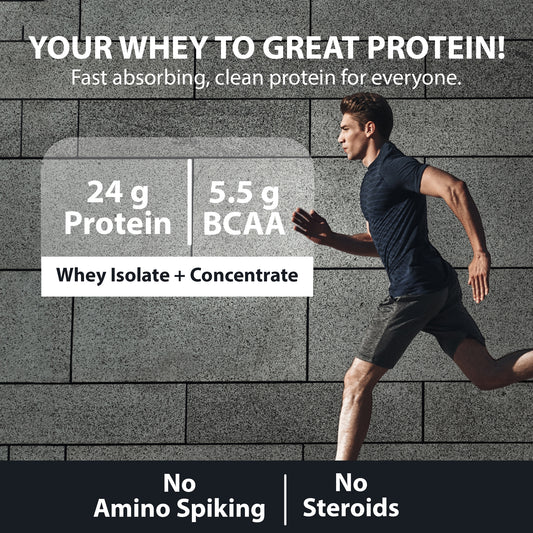
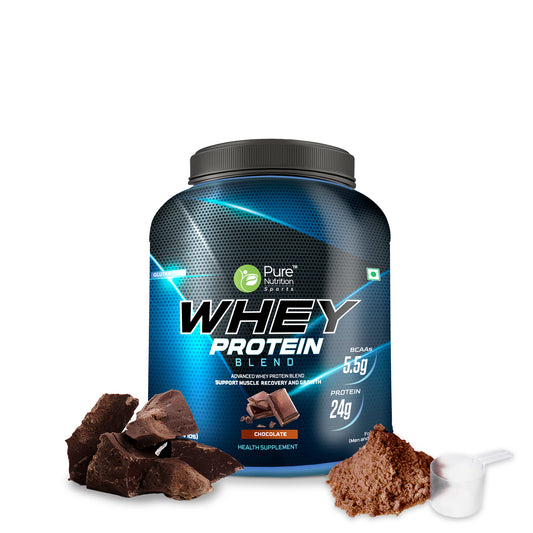
Our current whey collection is made up of whey protein blends: a combination of whey protein concentrate and whey protein isolate. The product pages list 24 g of protein and 5.5 g of BCAA per scoop, with one level scoop (34 g) as the suggested daily serving, or as directed by your healthcare professional. Check the label on your pack for the full nutrition panel, ingredients and allergen information.
Choosing between them comes down to a few practical points. A 500 g pack suits a first purchase, since you can test the flavour and how you feel with it. The 1 kg and 2 kg packs suit regular use, provided the price per serving works out better for you. The Strength Combo makes sense if you already plan to use whey and creatine together. If you only need creatine, Pure Nutrition Micronized Creatine Monohydrate is available on its own.
These are blends, so lactose content depends on the formulation. If dairy is a problem for you, read the digestion section above and the product label, or look at the vegan protein range.
Whey Protein vs Plant Protein
Whey is derived from milk. Plant protein is a broader category that includes soy, pea, rice and blends of several sources, so the products vary more from one to the next.
Protein quality differs by source. The ICMR-NIN guidelines note that animal proteins such as milk provide all the essential amino acids in good proportions, while individual plant proteins are lower in some of them. They also note that combinations such as cereals with pulses complement each other. That is why many plant protein powders blend more than one source.
Neither is better for everyone. The choice depends on your diet (vegetarian, vegan, dairy-free), your tolerance, taste, budget and the specific formulation. Read plant protein labels the same way you would read whey: protein per serving, protein per 100 g, and the ingredient list. Whey is not suitable for vegans or for anyone with a milk allergy. To weigh them up properly, compare whey and plant protein, or browse the vegan protein range.
Learn More About Whey Protein
Sources
- Tang C, Xi T, Zheng J, Cui X. Chemical Properties of Whey Protein in Protein Powders and Its Impact on Muscle Growth in Athletes: A Review. 2025. SAGE Journals
- Jäger R, et al. International Society of Sports Nutrition Position Stand: protein and exercise. Journal of the International Society of Sports Nutrition. 2017;14:20. Full text
- Morton RW, et al. A systematic review, meta-analysis and meta-regression of the effect of protein supplementation on resistance training-induced gains in muscle mass and strength in healthy adults. British Journal of Sports Medicine. 2018;52(6):376-384. PubMed
- Schoenfeld BJ, Aragon AA, Krieger JW. The effect of protein timing on muscle strength and hypertrophy: a meta-analysis. Journal of the International Society of Sports Nutrition. 2013;10:53. PubMed Central
- ICMR-National Institute of Nutrition. Dietary Guidelines for Indians, 2024 (Guideline 8). PDF
- National Institute of Diabetes and Digestive and Kidney Diseases (NIDDK). Definition & Facts for Lactose Intolerance. NIDDK
- Food Allergy Research & Education (FARE). Milk Allergy vs. Lactose Intolerance. FARE