


Collection: Heart & Brain Health Supplements for Memory, Focus & Cardiovascular Wellness
Explore Pure Nutrition's collection of stress and sleep supplements featuring options formulated around ingredients such as magnesium, L-theanine, melatonin and other sleep- and relaxation-focused ingredients. Browse the collection to find products suited to different approaches to stress management, relaxation and better sleep.
-
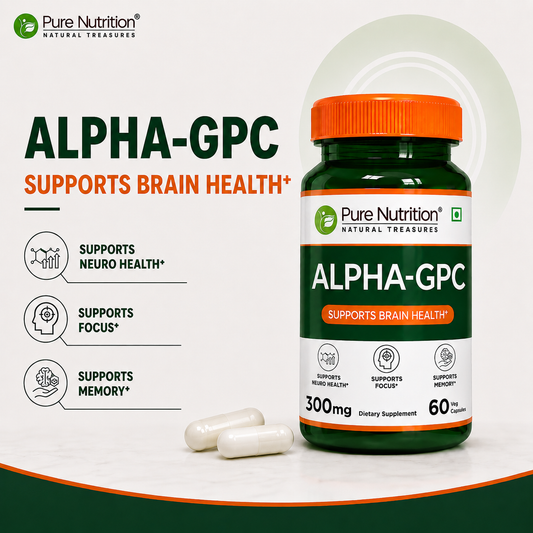
Alpha-GPC 300mg Capsules Brain Functi...
Sale 30% Off Sold outRegular price Rs. 699Regular priceUnit price perRs. 999Sale price Rs. 699Sale -
L-Theanine Capsules 200mg – Calm Focu...
Support Brain Health Stress Relief Good SleepSale 36% Off Sold outRegular price Rs. 509Regular priceUnit price perRs. 799Sale price Rs. 509Sale -
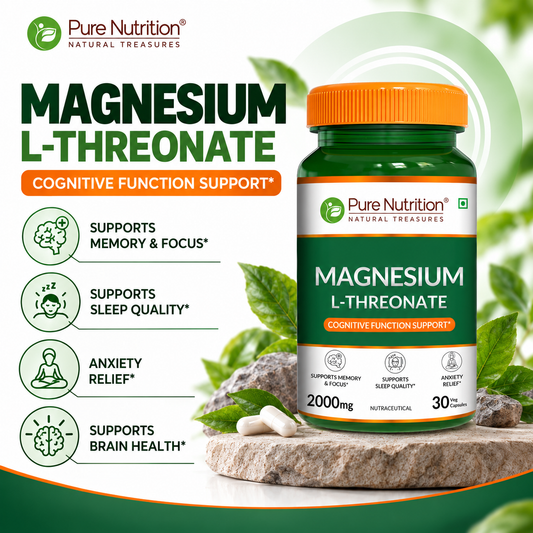
Magnesium L-Threonate Brain, Memory ...
Sale 33% Off Sold outRegular price Rs. 799Regular priceUnit price perRs. 1,199Sale price Rs. 799Sale -
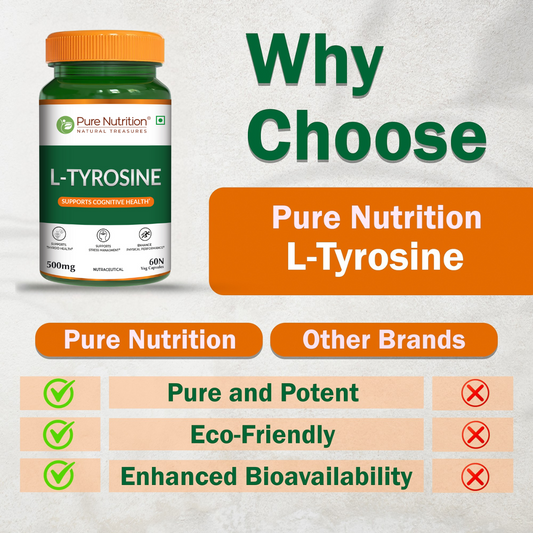
L-Tyrosine 500mg Veg Capsules Focus, ...
Helps Improve Cognition Stress Relief Increase Exercise performanceSale 30% Off Sold outRegular price Rs. 559Regular priceUnit price perRs. 799Sale price Rs. 559Sale -
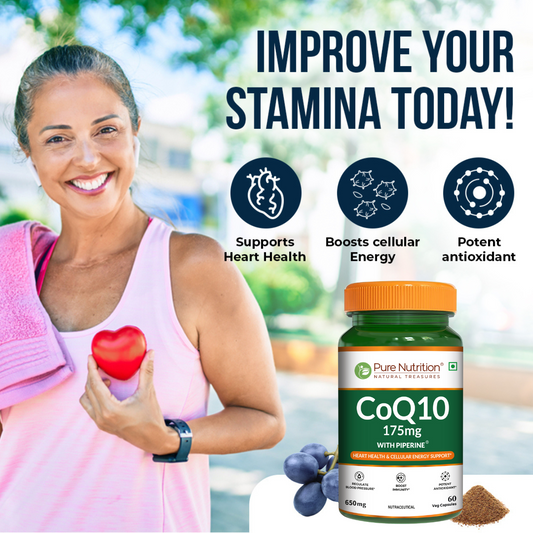
Coenzyme Q10 175mg Supports Cellular...
Supports Heart Health Boost Cellular Energy Potent AntioxidantSale 39% Off Sold outRegular price Rs. 921Regular priceUnit price perRs. 1,499Sale price Rs. 921Sale -
Omega 3-5-6-7-9 Supplements With Seab...
Promotes cognitive health Supports Heart Health Helps improve lipid profileSale 22% Off Sold outRegular price Rs. 775Regular priceUnit price perRs. 999Sale price Rs. 775Sale -
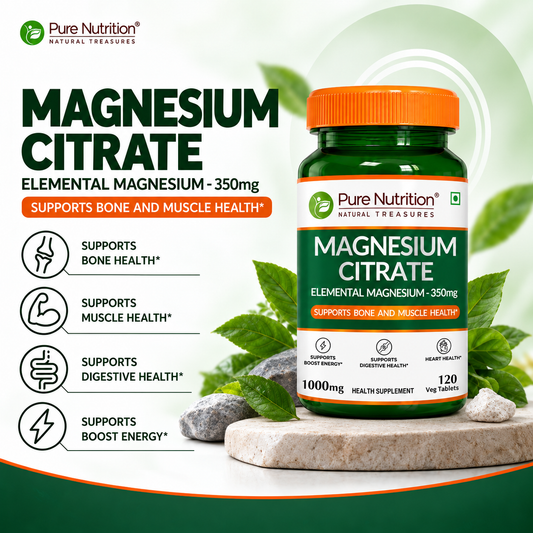
Magnesium Citrate - 120 Tablets | Sup...
Helps Boosts Energy Bone & Joint Health Supports digestive healthSale 42% Off Sold outRegular price Rs. 581Regular priceUnit price perRs. 999Sale price Rs. 581Sale -
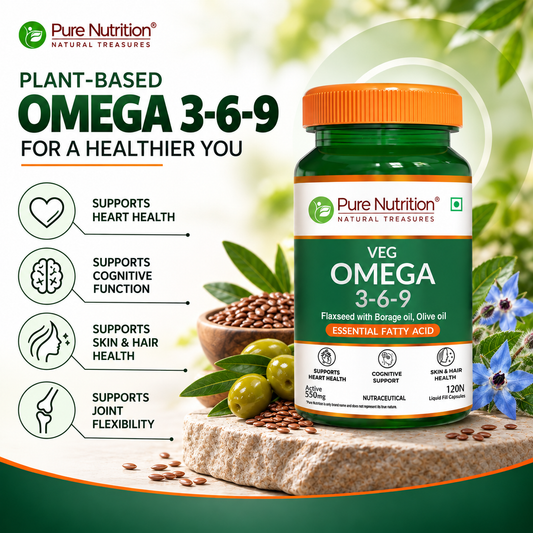
Veg Omega 3-6-9 Capsules 120 Count |...
Promotes cognitive health Supports Heart Health Helps improve lipid profileSale 18% Off Sold outRegular price Rs. 659Regular priceUnit price perRs. 799Sale price Rs. 659Sale -
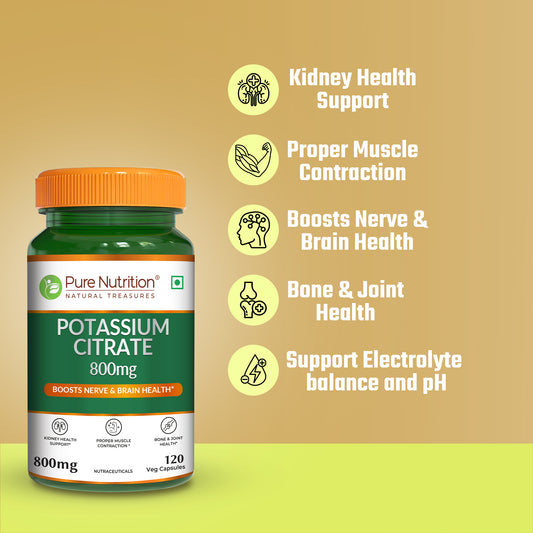
Potassium Citrate 800mg Nerve, Kidne...
Sale 32% Off Sold outRegular price Rs. 609Regular priceUnit price perRs. 899Sale price Rs. 609Sale -
Flaxseed Oil Capsules | 1000mg | Rich...
Supports Heart Health Support Brain Health Supports Skin HealthSale 13% Off Sold outRegular price Rs. 609Regular priceUnit price perRs. 699Sale price Rs. 609Sale -
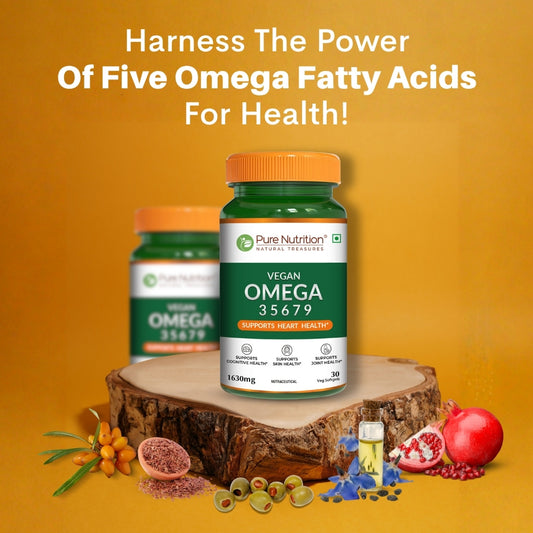
Vegan Omega Softgels Complete 3-5-6-7...
Sale 10% Off Sold outRegular price Rs. 1,163Regular priceUnit price perRs. 1,299Sale price Rs. 1,163Sale -
Spirulina Vegetarian Tablets 180 Cou...
Skin Health Boosts Immunity Healthy HeartSale 17% Off Sold outRegular price Rs. 581Regular priceUnit price perRs. 699Sale price Rs. 581Sale -
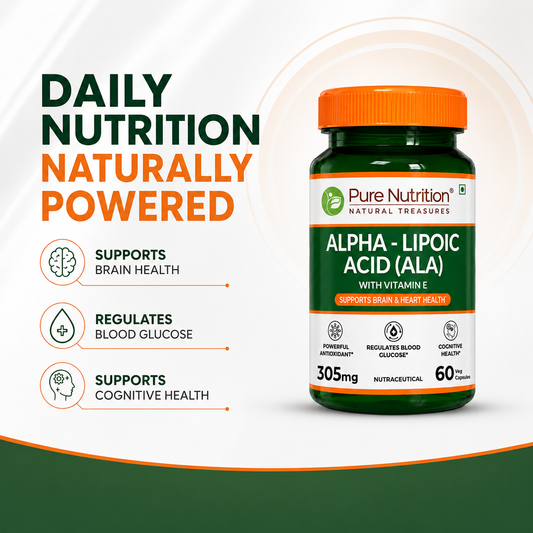
Alpha Lipoic Acid (ALA) 305mg Antiox...
Powerful Antioxidant Properties Helps improve energy level Contains a blend of plant-based extracts and L-CarnitineSale 34% Off Sold outRegular price Rs. 659Regular priceUnit price perRs. 999Sale price Rs. 659Sale -
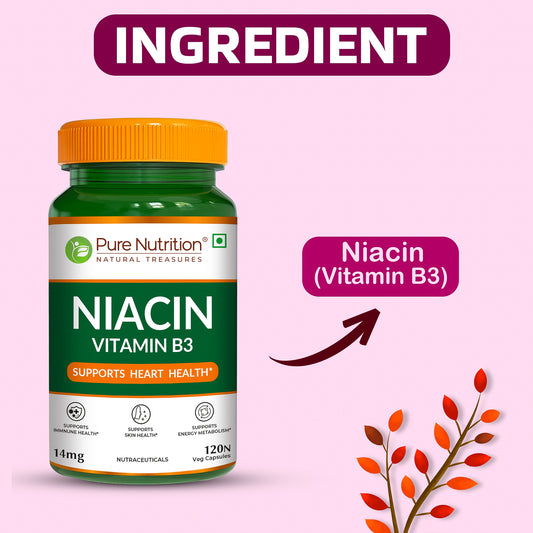
Vitamin B3 Niacin Capsules 120 Count ...
Supports Heart Health Boosts Immunity Helps Improve Skin HealthSale 33% Off Sold outRegular price Rs. 599Regular priceUnit price perRs. 899Sale price Rs. 599Sale -
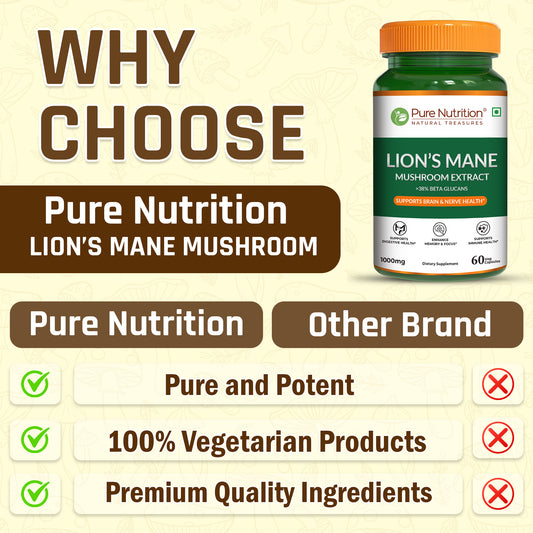
Lion's Mane Mushroom Extract 1000mg 3...
Sale 28% Off Sold outRegular price Rs. 649Regular priceUnit price perRs. 899Sale price Rs. 649Sale -
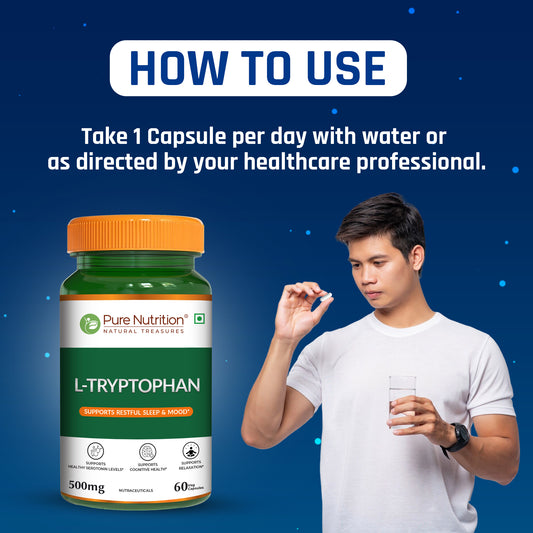
L-Tryptophan 500mg Veg Capsules Mood...
Sale 30% Off Sold outRegular price Rs. 559Regular priceUnit price perRs. 799Sale price Rs. 559Sale


















FAQ's
Heart and brain health supplements are nutritional products formulated with ingredients such as Omega-3 fatty acids, CoQ10, magnesium, choline, amino acids, vitamins and botanical extracts. Pure Nutrition's collection includes options such as Coenzyme Q10 175mg, Magnesium L-Threonate and Vegan Omega-3.
The collection includes Alpha-GPC, Choline Bitartrate, Magnesium L-Threonate, L-Theanine, L-Tyrosine, Lion's Mane, Ginkgo Biloba, Plant-Based Brain Boost and PQQ. For example, Magnesium L-Threonate is one of the products specifically positioned within the collection around brain, memory and focus.
Algae-based Omega-3 can provide EPA and DHA, while flaxseed-based Omega-3 provides ALA. If you specifically want an algae-derived option, explore Vegan Omega-3. You can also compare it with Omega 3-5-6-7-9 when considering a broader essential-fatty-acid formula.
Ubiquinol and standard CoQ10 are different forms of the same core nutrient, so one should not automatically be considered better for everyone. Pure Nutrition offers different CoQ10 formats, including Coenzyme Q10 175mg, Ubiquinol and LipoMax Liposomal CoQ10. Compare the form, dose and formulation before choosing.
Magnesium L-Threonate and Magnesium Citrate are different forms of magnesium. Magnesium L-Threonate is included in this collection for brain, memory and focus-oriented supplementation, while Magnesium Citrate is a separate magnesium formula. Compare the individual product information and serving directions before choosing.
Yes. The collection includes vegan and plant-based options, including Vegan Omega-3, Veg Omega 3-6-9 and Vegan Omega Softgels. Check each individual product label for the current formulation and dietary information.
Pure Nutrition offers several CoQ10 options, including Coenzyme Q10 175mg, Ubiquinol with Piperine and LipoMax Liposomal CoQ10. Compare the CoQ10 form, dosage, delivery format and product-specific directions to identify the option that best matches your requirements.
Do not assume that taking multiple supplements is necessary. Choose products according to your individual nutritional needs and follow the recommended serving directions. If you are taking prescription medication or have a medical condition, consult a healthcare professional before combining supplements such as CoQ10, Omega-3 or magnesium.
Start with your main goal, then compare the relevant ingredient, form, dietary preference, dosage and product format. For example, shoppers interested in Omega-3 can compare Vegan Omega-3 with Omega 3-5-6-7-8-9, while those looking at magnesium can compare Magnesium L-Threonate with Magnesium Citrate.
Consider your primary wellness goal, the ingredient and its form, dosage, dietary requirements and any relevant precautions. Compare the individual product information rather than treating all heart and brain supplements as interchangeable. For example, Coenzyme Q10, Magnesium L-Threonate and Vegan Omega-3 serve different supplementation needs.

