

L-Carnitine Dosage India: 1000 vs 2000 vs 3300mg

Introduction
So you've heard about L-carnitine. Maybe a friend at the gym mentioned it. Maybe you saw it on a supplement shelf. Maybe you Googled "fat loss supplement India" and this kept coming up.
Now you're staring at bottles that say 1000mg, 2000mg, and 3300mg and you have absolutely no idea which one is right for you.
You're not alone.
This confusion is the #1 reason most Indians never get results from L-carnitine not because the supplement doesn't work, but because they're either taking too little, taking too much, or taking it at the wrong time.
Here's what makes this even more important for Indians specifically: if you eat a vegetarian or predominantly plant-based diet, your body's natural carnitine levels are already significantly lower than someone who eats meat every day. That means your baseline need is different and your ideal dosage may be different too.
In this guide, we'll break down exactly what 1000mg, 2000mg, and 3300mg of L-carnitine actually does, who each dosage is best suited for, when to take it, and how to do it safely. No jargon. No exaggerated claims. Just clear, evidence-based guidance you can actually use.
What is the Best L-Carnitine Dosage for Fat Loss?
Most people benefit from 1000–2000mg daily, especially beginners and those focused on weight loss. 3300mg is used in liquid formats for faster absorption, higher endurance needs, and serious fitness users. Always start with the lower dose and increase only after assessing tolerance. For Indians on vegetarian diets, even 1000mg daily can make a meaningful difference.
What is L-Carnitine and How Does It Work?
Before we talk dosage, you need to understand what L-carnitine actually does in your body. Because knowing the mechanism helps you use it smarter.
L-carnitine is a naturally occurring compound technically an amino acid derivative that your body makes using two other amino acids: lysine and methionine. Its primary job is to act like a shuttle.
Here's the simple version:
Your body stores fat in cells as fatty acids. To burn that fat for energy, those fatty acids need to get inside your mitochondria (the energy-producing engine inside each cell). But they can't just walk in.
L-carnitine is what carries them inside.
Without enough L-carnitine, fat just sits there. It doesn't get transported. It doesn't get burned. The energy-making process slows down.
With sufficient L-carnitine, fatty acids get ferried into mitochondria, where they're converted into ATP your body's actual fuel. This is the basis of L-carnitine's role in fat metabolism.
Why This Matters Especially for Indian Bodies
Here's the part most supplement blogs don't tell you:
Your body gets L-carnitine from two sources:
- Internal production (your liver and kidneys make some)
- Dietary intake primarily from red meat and animal products
Lamb and beef have the highest natural carnitine content. Chicken and fish have a moderate amount. Vegetables, pulses, and plant-based foods have almost none.
If you're vegetarian and a significant portion of India's population is you're getting far less dietary carnitine than someone eating meat daily. Your baseline is already lower. That's not a weakness; it's just a biological reality that makes L-carnitine supplementation particularly relevant for you.
This is why the Indian context matters when deciding your dosage.
L-Carnitine Dosage Comparison: 1000mg vs 2000mg vs 3300mg
Let's break each dosage tier down clearly.
1000mg: Beginner Level Dosage
Who should take 1000mg?
- Complete beginners to supplements
- People who don't go to the gym but want metabolic support
- Working professionals looking for light fat metabolism support
- Those with a sensitive stomach or prone to digestion issues
- Anyone who has never used L-carnitine before
What does 1000mg do?
At 1000mg, you're giving your body a meaningful boost in carnitine availability especially if you're a vegetarian whose baseline is naturally low. This dose is sufficient to support baseline fat transport, improve energy metabolism, and gently improve recovery.
For non-gym users, 1000mg taken in the morning on an empty stomach can help the body utilise stored fat more efficiently throughout the day.
Limitations of 1000mg:
- May not be sufficient for active gym-goers with higher metabolic demands
- Results will be subtle don't expect dramatic changes
- Less effective as a standalone pre-workout dose if you train intensely
Ideal for: Beginners, weight loss seekers who don't train heavily, and those just starting to build a supplement routine.
2000mg: The Standard Effective Dose
Who should take 2000mg?
- Regular gym-goers (training 3–5 days per week)
- Intermediate fitness users who've hit a plateau
- People focusing on fat loss while preserving muscle
- Endurance athletes with moderate training volume
What does 2000mg do?
This is the most researched dosage tier in clinical literature. Multiple studies examining L-carnitine's role in fat oxidation, exercise performance, and recovery have used dosages in the 1500–2000mg range.
At 2000mg, you're providing your body with enough carnitine to:
- Significantly enhance fatty acid transport during exercise
- Support sustained energy levels during longer workouts
- Reduce exercise-induced muscle damage markers
- Improve recovery between sessions
For gym users focused on fat loss without muscle loss a common goal in India among people cutting weight 2000mg is typically the sweet spot.
Common practice in sports nutrition is to take this dose 30–60 minutes before training for optimal fat-burning effect during the workout.
Limitations of 2000mg:
- Capsule forms at 2000mg can sometimes cause mild GI discomfort initially
- Not always necessary for sedentary individuals
- Should ideally be paired with consistent physical activity to maximise fat metabolism
Ideal for: Regular gym users, people in the plateau phase of fat loss, runners, cyclists, and intermediate-level athletes.
3300mg: High Strength Liquid Dosage
Who should take 3300mg?
- Serious fitness users and athletes
- People doing high-intensity training or endurance sports (marathons, cycling, football)
- Those who want faster, more bioavailable carnitine delivery
- Individuals who've used lower doses without noticeable results
What does 3300mg do?
The 3300mg dose is most commonly found in liquid L-carnitine formats, and that's not a coincidence.
Liquid L-carnitine has a faster absorption rate compared to capsules or tablets. When you swallow a liquid supplement, it doesn't need to break down in the stomach the same way a solid capsule does it's already in a form your body can rapidly absorb.
This means at 3300mg in liquid form:
- Carnitine reaches your bloodstream faster
- Peak plasma concentration happens quicker
- The pre-workout window becomes more effective
- Higher-demand athletic activity gets better fuel support
Based on clinical research, higher carnitine doses like 3300mg are associated with improved oxygen utilisation during endurance exercise, better lactate clearance (which means you fatigue less quickly), and enhanced performance during prolonged physical effort.
This isn't a dose you need to start with. But if you're a serious athlete or someone with high physical demands who hasn't responded well to lower doses, 3300mg in liquid form is a legitimate, evidence-supported step up.
👉 If you're looking for a high-strength option with fast absorption, check out Pure Nutrition L-Carnitine Liquid 3300mg, Valencia Orange (450ml, 30 servings). It's designed specifically for this dosage tier.
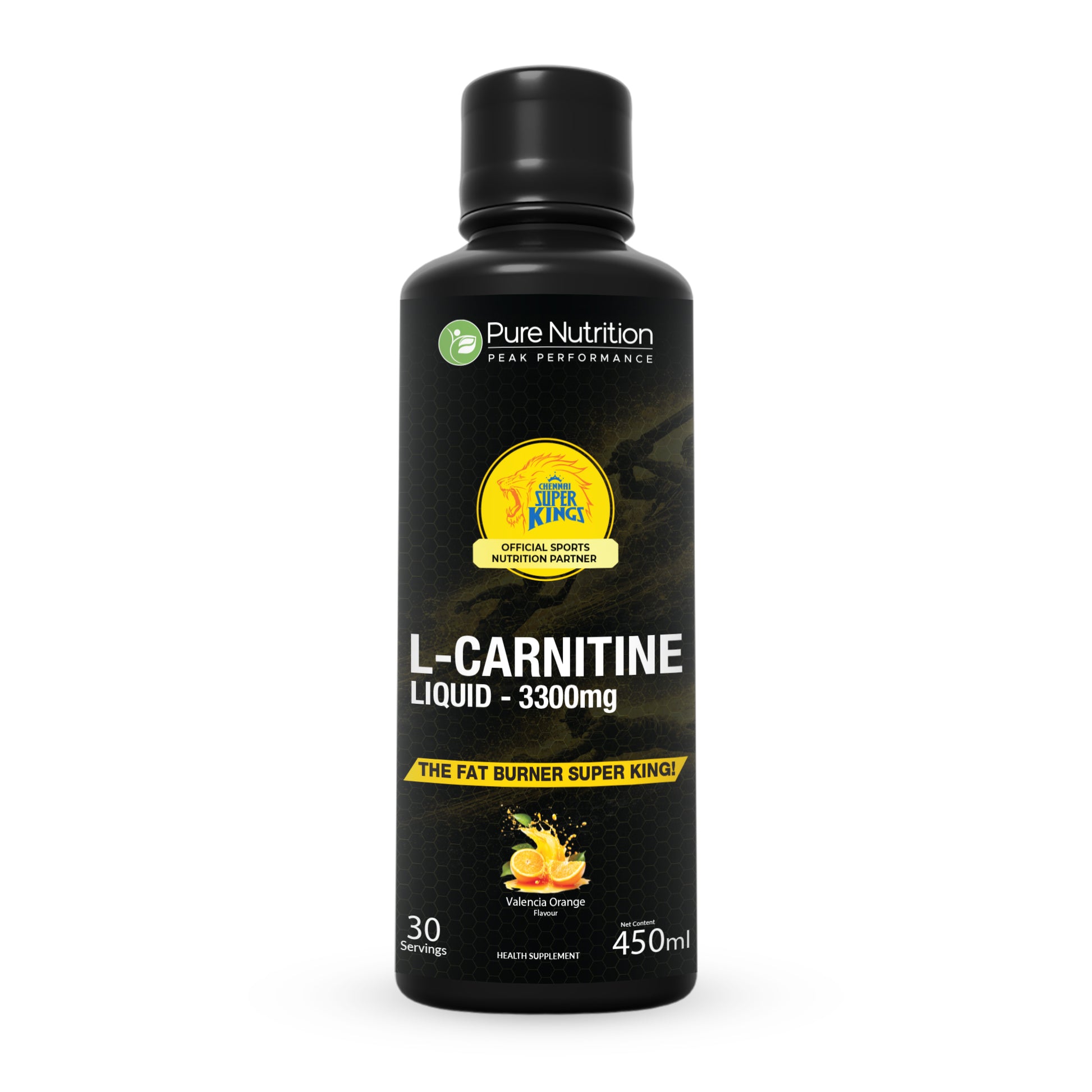
Liquid L-Carnitine · 30 servings
Pure Nutrition L-Carnitine Liquid 3300mg
Valencia Orange · 450ml · 3300mg per serving
Free shipping · Extra 5% off on prepaid orders, subject to offer terms.
Check AvailabilityCheck the product page for current stock, price and offer terms.
Limitations of 3300mg:
- Not necessary for beginners or casual users
- Higher cost per serving
- Should only be considered after you've assessed tolerance at lower doses
Ideal for: Athletes, serious gym-goers, endurance sports enthusiasts, and experienced supplement users.
Dosage Comparison Table
|
Dosage |
Best For |
Effectiveness |
Form |
Safety |
|
1000mg |
Beginners, non-gym users, vegetarians |
Mild supports baseline metabolism |
Capsule / Liquid |
Very safe, excellent tolerance |
|
2000mg |
Regular gym-goers, fat loss, recovery |
Moderate-High clinically well-studied |
Capsule / Liquid |
Safe for most adults |
|
3300mg |
Athletes, endurance sports, high intensity |
High maximum fat transport & performance |
Liquid (preferred) |
Safe with normal usage; not for beginners |
Who Should Choose What: The Decision Guide
"If you're a 22-year-old gym beginner in Mumbai..." Start with 1000mg for 2–3 weeks. Once your body is comfortable, move to 2000mg. Only consider 3300mg after 2–3 months of consistent training.
"If you're a 30-year-old working professional in Delhi, no gym..." 1000mg in the morning on an empty stomach. Pair with a 30-minute walk. You don't need 3300mg it won't help you more if you're not exercising.
"If you're a vegetarian athlete training for a half-marathon..." Start at 2000mg and consider moving to 3300mg liquid in the 4–6 weeks before your race. Your natural carnitine levels are lower, so supplementation matters more.
"If you're an intermediate gym-goer stuck at a fat loss plateau..." 2000mg, taken 30–45 minutes pre-workout. Reassess after 8 weeks. If you still feel under-fuelled during sessions, the 3300mg liquid format could be your next step.
"If you're a competitive cyclist or football player..." 3300mg liquid, pre-workout. This is the dose that aligns with performance-level demands.
Recommended L-Carnitine Dosage for Indians, Special Considerations
This section is specifically for the Indian context, because our dietary habits, lifestyle, and metabolic patterns make the standard global advice only partially relevant.
The Vegetarian Factor
India has one of the largest vegetarian populations in the world. This is culturally rich and nutritionally complete in many ways but when it comes to carnitine intake, plant-based diets fall significantly short.
Studies show that strict vegetarians have plasma carnitine concentrations that are substantially lower than omnivores. This isn't dangerous in normal life, but it does mean:
- Your fat metabolism may be running at a sub-optimal level
- Supplementation has a bigger relative impact for you than for a meat-eater
- Even 1000mg daily can produce noticeable improvements in energy levels and fat utilisation
Recommendation for vegetarians: Don't underestimate 1000mg. It may be enough to shift your baseline significantly, especially in the first few months.
The Lifestyle Factor
Many Indians have sedentary jobs long hours at a desk, commuting, limited structured exercise. In this context, L-carnitine without any physical activity still provides metabolic support, but results will be slower.
The truth: L-carnitine is not a magic fat burner. It works by making your body better at using fat for fuel but your body still needs to be in a situation where it's using fuel actively.
Walking, yoga, light gym work, cycling any regular movement amplifies L-carnitine's effects dramatically.
The Diet Context
If your daily diet is high in simple carbohydrates (white rice, maida, sugary drinks), your body will preferentially burn glucose, not fat. L-carnitine's fat-transport role becomes less impactful when insulin is constantly elevated.
Pairing L-carnitine with a moderately low-carb, protein-adequate diet gives you the best fat-burning environment especially relevant for Indians who often eat carb-heavy meals.
Best Time to Take L-Carnitine in India
Timing actually matters with L-carnitine. Here's the clean breakdown:
Before a Workout (Best for Fat Burning)
When: 30–45 minutes before exercise
Why: This puts L-carnitine in your bloodstream right when your body needs it most during physical activity when fatty acid oxidation is at its highest.
Who: Gym-goers, runners, cyclists, any active individual
This is the most effective window for fat loss and performance support. Taking it here means the carnitine is available to shuttle fatty acids into mitochondria exactly when you're demanding energy from your body.
Morning on an Empty Stomach (Non-Gym Users)
When: First thing in the morning, 20–30 minutes before breakfast
Why: Your body is already in a mildly fasted state after overnight sleep. Insulin levels are low. Fat metabolism is active. Adding carnitine here supports that natural fat-burning window.
Who: Working professionals, non-gym users, weight loss seekers
With a Carbohydrate Source (Insulin Spike Strategy)
Some advanced users take L-carnitine with a small carbohydrate source because the resulting insulin spike can help push carnitine into muscle cells more effectively.
This is not necessary for most people, but if you're a serious athlete trying to maximise muscle carnitine stores, taking it with a banana or a small amount of fruit juice isn't unreasonable.
Avoid taking L-carnitine with a large, heavy meal it slows absorption and reduces effectiveness.
Is 3300mg L-Carnitine Safe? The Evidence-Based Answer
Let's address this clearly, because a lot of people in India are genuinely concerned about "overdosing" on supplements.
Yes, 3300mg is safe for healthy adults.
Here's what the research actually shows:
- The European Food Safety Authority (EFSA) has evaluated L-carnitine and confirmed that doses up to 3000mg per day are safe with no observed adverse effects
- Studies have used doses up to 6000mg daily in clinical settings without toxicity
- L-carnitine is water-soluble your kidneys can excrete excess amounts without it accumulating to dangerous levels
Common side effects (if any) at higher doses:
- Mild nausea (usually disappears after 1–2 weeks)
- Loose stools initially (especially in first few days)
- A slightly "fishy" body odour in some individuals (this is rare and associated with a genetic condition called trimethylaminuria most people won't experience this)
Who should be cautious:
- People with kidney disease (L-carnitine metabolism is kidney-dependent)
- Those on thyroid medication (some studies suggest interactions consult a doctor)
- Pregnant or breastfeeding women (consult a healthcare professional before use)
- People with existing heart conditions (though carnitine has actually been studied for cardiac benefits, professional guidance is still important)
The key takeaway: 3300mg is a high dose but it is not an unsafe dose for a healthy adult. The safety concern is not about toxicity; it's about not needing it if you're a beginner or sedentary individual. Don't take 3300mg just because you can. Take it because your activity level and goals justify it.
L-Carnitine for Different Goals
For Fat Loss
Best dose: 1000–2000mg daily
Best time: Before workout or morning fasted
Key expectation: Fat loss support, not instant fat melting. L-carnitine improves the efficiency of fat metabolism. Paired with a caloric deficit and regular exercise, it meaningfully accelerates the process.
Realistic timeline: Most users report noticeable differences in energy levels within 2–3 weeks. Visible fat loss changes are typically seen over 8–12 weeks of consistent use.
For Muscle Recovery
Best dose: 2000mg post-workout
Why: After intense training, your muscles experience oxidative stress and minor damage. L-carnitine has been shown (based on clinical research) to reduce markers of muscle damage and soreness. It may help you bounce back faster between sessions.
Who benefits: Anyone training 4+ days a week, especially those doing heavy resistance training.
For Endurance and Athletic Performance
Best dose: 2000–3300mg pre-workout
Why: Higher doses support fatty acid oxidation during prolonged effort, spare glycogen (your carbohydrate reserves), and may delay the onset of fatigue.
Who benefits: Runners, cyclists, football players, and anyone doing sustained aerobic activity for 45 minutes or more.
For endurance athletes, the 3300mg liquid format is a particularly smart choice fast absorption means carnitine is in your bloodstream by the time you start your session.
Common Mistakes Indians Make with L-Carnitine
Mistake #1: Expecting Instant Fat Loss
This is the most common one. People take L-carnitine for 7 days, see no change in the mirror, and decide it "doesn't work."
L-carnitine is not a stimulant. It doesn't speed up your heart rate or burn calories on its own. It optimises a metabolic pathway and that optimisation shows up over weeks and months, not days.
Fix: Commit to at least 8 weeks of consistent use before evaluating results.
Mistake #2: Taking It Without Any Physical Activity
L-carnitine works by transporting fat into cells that are actively demanding energy. If you're sitting at your desk all day with no movement, there's very limited demand for energy and very limited fatty acid oxidation happening.
Fix: Even a 30-minute brisk walk daily will activate the metabolic processes that L-carnitine supports. You don't need to be a gym warrior but you do need to move.
Mistake #3: Jumping Straight to 3300mg
The temptation is understandable more must be better, right? Not really. Starting at 3300mg without any acclimatisation can cause GI discomfort that puts you off the supplement entirely. And if you're a beginner, 3300mg won't give you 3x the results of 1000mg your body's systems aren't even using the lower dose to full capacity yet.
Fix: Start at 1000mg, graduate to 2000mg, then consider 3300mg only when your training level genuinely calls for it.
Mistake #4: Taking It After a Large Meal
L-carnitine absorption is impacted when taken alongside a heavy meal. The competition for absorption pathways slows everything down and you lose the timing advantage.
Fix: Always take L-carnitine at least 20–30 minutes before food, or directly before your workout on an empty or light stomach.
Mistake #5: Being Inconsistent
L-carnitine is not a supplement you take once in a while. Its benefits accumulate with consistent daily use. Missing 3 days, then taking double doesn't work the same way.
Fix: Build it into a daily habit same time, same dose, every day.
Liquid vs Capsule: Which Form of L-Carnitine is Better?
This is one of the most frequently asked questions, and the answer depends on your goal.
Absorption Speed
Liquid L-carnitine wins here, clearly.
When you drink a liquid supplement, it begins absorbing in the stomach almost immediately. A capsule, by contrast, needs to dissolve first a process that can take 15–30 minutes before absorption even begins.
For pre-workout use, this difference matters. If you take a capsule 20 minutes before training, it may not even be fully absorbed when you start your session. A liquid taken 20 minutes before training is already in your bloodstream.
Dosage Convenience
With liquid formats like 3300mg, you get a high dose in a single serving without swallowing multiple capsules. This is especially practical if you have difficulty with large capsules or don't want to carry multiple pills.
Taste and Palatability
Liquid carnitine in flavoured formats (like Valencia Orange) is generally more enjoyable to consume than flavourless capsules which matters for daily consistency.
Cost Efficiency
Capsules at lower dosages (500mg–1000mg per capsule) can be more economical for beginners. Liquid formats at 3300mg offer better value at the higher dose tier because you'd need 3–6 capsules to match the same dose.
Verdict
|
Factor |
Liquid |
Capsule |
|
Absorption Speed |
✅ Faster |
❌ Slower |
|
Pre-workout Use |
✅ Better |
⚠️ Less Optimal |
|
High-Dose Convenience |
✅ Easier |
❌ Multiple Pills Needed |
|
Beginner Convenience |
⚠️ Adjust to taste |
✅ Tasteless/Simple |
|
Portability |
⚠️ Requires bottle |
✅ Pocket-friendly |
For athletes and serious users: Liquid, specifically the 3300mg L-Carnitine liquid option, is the smarter choice.
For beginners and casual users: Start with capsules at 1000mg before graduating to liquid.
Which L-Carnitine Format Fits Your Routine?
Compare the serving strength, format and listed price before choosing. A higher serving strength is not automatically the right choice for everyone.
| Feature | L-Carnitine Liquid | Veg Capsules |
|---|---|---|
| Product |
Liquid 3300mg Valencia Orange |
L-Carnitine L-Tartrate 500mg vegetarian capsules |
| Serving strength | 3300mg per serving | 500mg per capsule |
| Pack format | 450ml · 30 servings | Vegetarian capsule format |
| Listed price |
₹809
MRP |
₹659
MRP |
| Listed rating | 4.6/5 · 32 reviews | 4.5/5 · 123 reviews |
| Format preference | For people who prefer a ready-to-use liquid as part of their workout routine. | For people who prefer a compact vegetarian capsule with a measured serving. |
| Check product | Check Availability → | Check Availability → |
Prices, ratings, offers and availability may change. Check each product page for current details.
FAQs: L-Carnitine Dosage for Indians
Q. Is 1000mg L-carnitine enough for weight loss?
A. Yes, 1000mg is a meaningful starting dose, especially for vegetarians and non-gym users. It may not show dramatic results quickly, but it supports your body's fat transport mechanism consistently. For best results, pair it with light exercise and a moderate diet. If you're actively training, consider moving to 2000mg after 3–4 weeks.
Q. Can I take 2000mg of L-carnitine daily?
A. Yes. 2000mg daily is safe and well-studied. This is the most commonly used effective dose in clinical research. It's appropriate for regular gym users, people focused on fat loss, and those in an endurance training programme. Take it 30–45 minutes before exercise or in the morning if you're a non-gym user.
Q. Is 3300mg L-carnitine too much?
A. No, it's not too much for the right person. 3300mg is safe for healthy adults and is backed by safety evaluations from major food safety bodies. However, it's not necessary for beginners or sedentary individuals. It's best suited for athletes and high-intensity users. If you're just starting out, begin at 1000mg.
Q. How long does L-carnitine take to work?
A. Be patient. Most people notice improvements in energy levels within 2–3 weeks. Visible changes in body composition typically take 8–12 weeks of consistent daily use combined with exercise and a sensible diet. L-carnitine is not a quick fix it's a metabolic support supplement.
Q. Should I take L-carnitine before or after a workout?
A. Before your workout is generally more effective for fat burning. Take it 30–45 minutes before training. This ensures peak plasma concentration aligns with your training session, maximising fatty acid oxidation during exercise.
Q. Can vegetarians benefit more from L-carnitine?
A. Yes, relatively speaking. Since plant-based diets provide very little dietary carnitine, vegetarians start from a lower baseline. Supplementation has a larger relative impact for them. Even modest doses like 1000mg can produce meaningful improvements in energy and metabolism for vegetarians who haven't been getting dietary carnitine.
Q. Are there side effects of L-carnitine at higher doses?
A. Mild and uncommon. Some people experience mild nausea, loose stools, or stomach discomfort in the first few days of higher-dose use. These usually resolve within 1–2 weeks. A rare side effect in genetically predisposed individuals is a fishy body odour. Serious side effects are not associated with standard supplementation doses in healthy adults.
Q. Can women take L-carnitine?
A. Absolutely yes. L-carnitine is not gender-specific. Women benefit from it in exactly the same ways as men improved fat metabolism, better energy, and enhanced recovery. It does not cause masculinisation, weight gain, or hormonal disruption. It's particularly popular among women focusing on fat loss without muscle loss.
Q. Do I need to cycle L-carnitine?
A. No cycling is necessary. Unlike stimulant supplements, L-carnitine doesn't cause receptor downregulation or dependency. You can take it daily, continuously. Some users choose to take a break simply to reassess their baseline, but it's not required for safety or effectiveness.
Conclusion
Start at 1000mg if you're new to L-carnitine, eat a vegetarian diet, or don't train actively. It's safe, effective as a starting point, and will give your body time to adjust.
Move to 2000mg when you're training regularly (3–5 days a week) and want more meaningful fat loss or performance support. This is the most research-backed dose for active individuals.
Choose 3300mg in liquid form when your training is serious, your demands are high, and you want the fastest absorption and highest support. This is athlete territory and the liquid format makes the dose both practical and bioavailable.
Remember the Indian context: If you're vegetarian, your baseline carnitine is already lower supplementation helps more. If your diet is high-carb and low-movement, no dose of L-carnitine will compensate. The supplement works with your lifestyle, not instead of it.
And one final thought: don't chase the highest dose for the sake of it. The best dose is the one that matches your current activity level, goals, and tolerance taken consistently, at the right time, as part of a broader health approach.
Explore more from Pure Nutrition's supplement range and find what fits your goal.

