

Liposomal Vitamin C: The Complete Guide to Benefits & Absorption in India (2026)

For over a decade, India's official vitamin C target for adults sat flat at 40mg a day less than what's in half a mausambi. In 2020, the Indian Council of Medical Research quietly doubled it for men. Most supplement labels, including most liposomal vitamin C bottles on Indian shelves, never got the memo. This guide breaks down what liposomal vitamin C actually is, what the research says about absorption, how it compares with regular vitamin C, and exactly how much you need using Indian guidelines, not a global average built for a different diet.
- Liposomal vitamin C encased in fat-based spheres for steadier absorption
- 2024 clinical trial found 27% higher plasma, 20% higher leukocyte levels
- ICMR's 2020 update raised the adult RDA to 80mg (men), 65mg (women)
- Consistent daily timing beats occasional mega-dosing for real results
- FSSAI licensing and GMP manufacturing the real markers of a safe buy
Liposomal vitamin C is regular vitamin C (ascorbic acid) wrapped inside a microscopic sphere of phospholipids the same fat molecules found in cell membranes so it survives digestion better than a plain tablet. A 2024 randomized controlled trial found this delivery raised peak blood levels 27% higher, and immune cell levels 20% higher, than standard vitamin C.
Introduction
Here's the part most vitamin C marketing skips: how much you swallow and how much your body actually absorbs are two different numbers. Regular ascorbic acid tablets lose a meaningful share of their dose during digestion, especially once you cross about 500mg in one sitting. Liposomal vitamin C tries to fix that by wrapping the same nutrient inside a microscopic, fat-based sphere designed to survive digestion mostly intact.
This matters more once you factor in a typical Indian diet: heavy on cereals and dal, lighter on the citrus fruits and fresh produce that carry most of our natural vitamin C, and often reduced further by the heat, storage, and reheating that Indian cooking involves. Add in Mumbai-Bengaluru-Delhi work schedules that make three balanced meals a day more theory than practice, and a supplement stops being optional for a lot of people.
So does liposomal vitamin C actually absorb better, and is it worth the extra price on an Indian shelf? By the end of this guide, you'll know exactly what the clinical research shows, how much to take, when to take it, and what to check on the label before you buy.
What Is Liposomal Vitamin C?
Liposomal vitamin C is exactly what it sounds like once you break the word apart. "Vitamin C" is ascorbic acid, the same molecule in every orange, amla, and plain vitamin C tablet on the market. "Liposomal" describes the delivery system: the ascorbic acid gets wrapped inside a liposome, a microscopic sphere built from phospholipids, the same fat molecules that make up the walls of your own cells.
Your gut absorbs vitamin C through specific transport proteins called SVCTs, and these have a ceiling. Past a certain dose taken as a plain tablet, extra milligrams mostly pass through unused rather than entering your blood. Vitamin C is also fragile inside the gut sensitive to stomach acid, enzymes, and oxygen, all of which can break it down before absorption happens at all.
This is what researchers mean by "bioavailability" not how much vitamin C is printed on a label, but how much of it your body can actually use. Two products can list the same 500mg and behave very differently once they hit your stomach.
Vitamin C is also notoriously unstable outside the body. It breaks down with heat, light, and time, which matters in a country where vegetables often travel from farm to mandi to kitchen over several days, then get cooked well past the point that preserves it. By the time dal or sabzi reaches your plate, a meaningful share of its original vitamin C may already be gone.
There's also a practical, India-specific detail worth knowing about the supplement itself. Most vitamin C capsules use plain gelatin shells made from animal collagen, which rules them out for the large vegetarian population that makes up much of the country. Well-formulated liposomal vitamin C products use plant-derived phospholipids and vegetarian capsule shells instead, so the format doesn't force a diet compromise most Indian buyers would rather avoid.
Why Does Liposomal Vitamin C Absorb Better?
Here's where it gets interesting. A regular vitamin C tablet has to survive stomach acid, then compete for a limited number of SVCT transport proteins in your small intestine to get absorbed. At low-to-moderate doses this works reasonably well. Push past roughly 500–1,000mg in one sitting, though, and the extra amount mostly gets excreted rather than absorbed, since the transport system is already saturated.
Liposomal vitamin C is built to sidestep part of that bottleneck. Because its outer shell is made of the same phospholipids as a cell membrane, it can fuse with or be taken up by intestinal cells more directly, rather than relying entirely on the saturable SVCT pathway. The shell also physically shields the ascorbic acid from stomach acid and digestive enzymes until it's released.
This isn't just theory anymore. A 2024 randomized, double-blind, placebo-controlled trial, conducted partly in Bengaluru and published in the European Journal of Nutrition, tested a single 500mg dose of liposomal versus standard vitamin C in 27 healthy adults.
Source: Purpura et al., 2024, European Journal of Nutrition randomized, double-blind, placebo-controlled crossover trial, n=27, single 500mg dose. Bars scaled relative to the standard vitamin C result in the same trial.
In plain numbers: the liposomal form produced 27% higher peak plasma vitamin C and 21% greater total absorption over 24 hours than standard vitamin C at an identical dose. Leukocyte levels, which matter more directly for immune function than blood levels alone, peaked 20% higher.
It's worth being precise about what this proves and what it doesn't. The trial confirms better absorption into blood and immune cells; it wasn't designed to measure whether that translates into fewer colds or faster healing. That distinction, between improved absorption and improved outcomes, is the honest answer most marketing skips.
Liposomal Vitamin C: Pros
- RCT-confirmed higher plasma and leukocyte absorption
- Generally gentler on the stomach at higher doses
- Usually vegetarian-friendly (plant-derived phospholipids)
- Convenient once-daily dosing
Liposomal Vitamin C: Cons
- Costs more per mg than plain ascorbic acid
- Smaller advantage if your diet is already consistent
- Fewer large, independent long-term trials so far
- Not a universal upgrade a genuine cost-benefit call
| Study | Design | Dose Tested | Key Finding |
|---|---|---|---|
| Purpura et al., 2024 European Journal of Nutrition | Randomized, double-blind, placebo-controlled crossover (n=27) | 500mg single dose | +27% peak plasma, +20% peak leukocyte vitamin C vs standard vitamin C |
| Davis et al., 2016 Nutrition and Metabolic Insights | Randomized crossover (n=11) | 4g single dose | Significantly higher plasma vitamin C at 2, 3 and 4 hours vs unencapsulated vitamin C |
Benefits: What the Research Suggests
Immune Support
Vitamin C is one of the nutrients your immune system leans on hardest, particularly the white blood cells that hunt down infections. A 2017 review in the journal Nutrients by Carr and Maggini laid out how vitamin C supports both the front-line and adaptive arms of immunity, partly by protecting immune cells from oxidative damage during an infection. That matters through India's cold-and-flu season, and through the monsoon months when viral infections spike in most metro offices.
It's worth being precise about what the evidence actually shows, though. A Cochrane review by Hemilä and Chalker found no meaningful drop in cold frequency from routine vitamin C supplementation in the general population, but it did shorten the average cold by roughly 8% in adults and nearly halved cold risk in people under heavy physical stress, like marathon runners and soldiers in cold climates. Vitamin C is a genuine immune-support nutrient it just isn't a cold-prevention pill for most healthy adults.
Antioxidant Protection
Vitamin C is one of the body's primary water-soluble antioxidants, neutralising free radicals in blood and inside cells before they damage tissue. Granger and Eck's 2017 review in Advances in Food and Nutrition Research describes this antioxidant role as central to vitamin C's wider health functions. For anyone commuting through Delhi, Mumbai, or Bengaluru traffic most days, that antioxidant support is working against a genuinely higher daily load of airborne pollutants and UV exposure than a smaller town.
The caveat here is an important one: antioxidant supplementation supports your body's existing defences, it doesn't reverse pollution damage that's already happened. Think of it as backup for your diet, not a replacement for reducing exposure where you can.
Collagen Formation
Vitamin C is a required cofactor for the enzymes that stabilise collagen, the structural protein in skin, joints, cartilage, and blood vessel walls. This mechanism is well documented in bone and connective tissue research, including work by Aghajanian and colleagues published in the Journal of Bone and Mineral Research. It's also the science behind LipoMax's stated skin-wellness benefit, and why vitamin C often shows up alongside skincare routines, not just immunity ones.
Keep this in perspective: vitamin C supports the raw materials for collagen synthesis, but it won't substitute for sunscreen, hydration, or a dermatologist's advice for a specific skin concern.
Iron Absorption
Vitamin C converts plant-based, non-heme iron into a form your gut absorbs far more easily. This is precisely why nutritionists commonly suggest pairing dal, rajma, or palak with something vitamin-C rich at the same meal. For India's large vegetarian population, and especially for women, who face some of the highest rates of iron-deficiency anaemia in the world, this single pairing habit can matter more than almost any other dietary tweak. If iron is a bigger concern for you than vitamin C itself, our guide to iron deficiency signs in Indian women goes deeper on that topic.
One timing note: this effect depends on taking vitamin C with the iron-containing meal, not hours apart, and tea or coffee at the same meal will blunt the benefit due to the tannins they contain.
Exercise Recovery
There's early, still-developing evidence that vitamin C helps manage the spike in oxidative stress that follows intense exercise, relevant for India's fast-growing gym and marathon-running communities in cities like Bengaluru, Pune, and Mumbai. This is genuinely emerging science rather than settled fact.
One honest caveat worth knowing: some research suggests very high-dose vitamin C taken right around a workout may actually blunt certain training adaptations, so more is not automatically better here either. If recovery is your main goal, treat vitamin C as one small piece of a plan that includes sleep, protein, and hydration, not a stand-alone fix.
Who Should Consider Liposomal Vitamin C?
Best Suited For
- Vegetarians and vegans who want a supplement without animal-derived gelatin capsules
- Busy professionals with inconsistent meal timing across long commutes in Mumbai, Bengaluru, or Delhi NCR
- Smokers, since cigarette smoke raises oxidative stress and the body's vitamin C turnover
- Athletes and regular gym-goers managing exercise-related oxidative stress
- Older adults, whose dietary intake and absorption both tend to decline with age a population-based Indian study found vitamin C deficiency in nearly 74% of adults over 60 in north India and 46% in south India
Safety Considerations
Pregnancy: Vitamin C is generally considered safe in pregnancy at recommended doses and is actually needed in slightly higher amounts. Any new supplement during pregnancy should still be cleared with your gynaecologist first, since individual health situations vary.
Breastfeeding: Vitamin C at standard supplement doses is generally considered compatible with breastfeeding, but check with your doctor before adding any new supplement while nursing.
When to be more cautious
History of kidney stones: sustained intake above roughly 1,000mg a day has been linked to increased oxalate excretion, which may raise stone risk in people already prone to calcium oxalate stones.
Medication and condition interactions: vitamin C can interact with certain chemotherapy drugs and may affect the accuracy of some blood glucose and lab tests. People with hemochromatosis (iron overload) should also be cautious, since vitamin C increases iron absorption. When in doubt, check with your doctor or pharmacist.
Dosage, Timing & Best Practices
ICMR's 2020-revised RDA sets adult vitamin C needs at 80mg a day for men and 65mg for women, up from a flat 40mg under the older 2010 guidelines. That's the baseline your diet and supplement together should cover, not a target to blow past.
Most healthy adults do well with a liposomal vitamin C dosage of 80mg to 500mg a day, taken with a meal rather than on an empty stomach. Morning, with breakfast, tends to build the most consistent habit, though any consistent mealtime works. If you're also taking zinc for immune support, that's a well-tolerated combination just take both with food to avoid the mild nausea zinc can sometimes cause on an empty stomach. If you're pairing vitamin C with an iron supplement or an iron-rich meal, take them together, not hours apart, to get the absorption benefit.
| Form | Daily Amount | Timing | Notes |
|---|---|---|---|
| Liposomal Vitamin C (80mg capsule) | 1 capsule (80mg) | With any meal, same time daily | Meets ICMR's revised RDA for men in a single dose; vegetarian capsule |
| Standard Ascorbic Acid | 500mg–1,000mg | With or after food | Split into two doses above 500mg to ease absorption and reduce stomach upset |
| Vitamin C + Zinc combo | 80–500mg C + 11–15mg zinc | Morning, with breakfast | Common immune-support pairing; always take with food |
| Vitamin C for iron uptake | 65–80mg with the meal | Alongside dal, rajma, or palak | Avoid tea or coffee at the same meal; tannins blunt the effect |
Most people get this part wrong: they assume a higher number on the label always means a better result, and mega-dose 1,000–2,000mg thinking it "boosts immunity harder." Vitamin C is water-soluble, so the excess mostly gets excreted rather than stored, and very high single doses commonly cause loose motions or stomach cramping instead of extra benefit. When in doubt, start with the lower end of the range and assess after 4 weeks.
Pure Nutrition's Expert Take
We've spent years formulating nutrition products for Indian households, and vitamin C is one of the categories where we see the widest gap between what people buy and what they actually take consistently.
Our team noticed something interesting while going through customer feedback across our vitamin C and antioxidant range: people who paired their supplement with a fixed daily habit, morning chai, breakfast, or a bedtime routine, stuck with it for months. People who treated it as an emergency measure, popping it only after a cold already felt like it was coming on, usually stopped within a few weeks. Consistency turned out to be a bigger predictor of results than the brand, the dose, or even the delivery format.
That's also why we get asked so often whether liposomal formats are "worth it." Our honest answer: if you already eat citrus fruit, amla, or guava most days and rarely miss a meal, a standard vitamin C tablet will probably serve you fine. If your diet is inconsistent, you travel often for work, or standard vitamin C upsets your stomach at higher doses, the liposomal format is where we'd point you.
That's why we built LipoMax around a single, precisely dosed 80mg liposomal capsule in a vegetarian shell, manufactured in a GMP-compliant facility, and easy to fit into one meal a day.
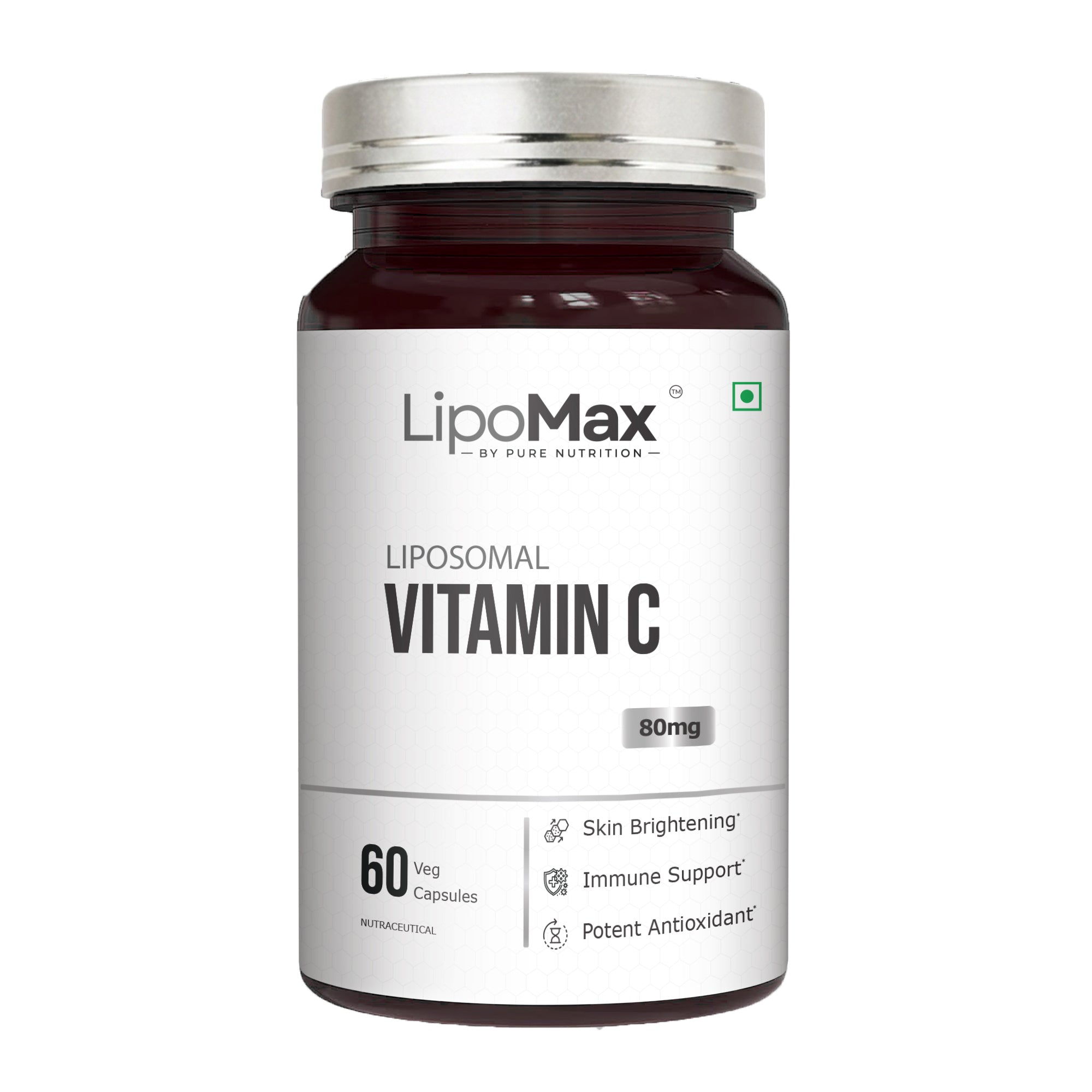
- Dose: 80mg liposomal vitamin C per capsule
- Pack size: 60 vegetarian capsules (60 servings, ~2 months)
- Suggested use: 1 capsule daily with a meal
- Manufacturing: GMP-compliant facility, FSSAI-licensed
- Diet: Suitable for vegetarians, free from animal-derived ingredients
- Storage: Cool, dry place below 30°C, away from direct sunlight
Liposomal Vitamin C vs Regular Vitamin C
"Liposomal vitamin C vs regular vitamin C" is one of the most common questions we get, so here's an honest side-by-side. No single format wins on every column, price included.
| Format | Absorption | Price/Month (₹) | Frequency | Veg | Best For |
|---|---|---|---|---|---|
| Liposomal Vitamin C (e.g. LipoMax) | Enhanced RCT-confirmed higher plasma & leukocyte levels | ~₹600 | Once daily | Yes | Inconsistent diets, sensitive stomachs, absorption priority |
| Regular Ascorbic Acid | Well-absorbed up to ~500mg; plateaus at higher single doses | ~₹150–350 | Once, or split into two | Usually check label | Steady diets, budget-conscious buyers |
| Buffered Vitamin C | Similar to standard; gentler on the stomach (less acidic) | ~₹300–500 | Once or twice daily | Usually check label | Acid-reflux-prone stomachs |
| Ester-C | Similar to standard in controlled trials, despite "enhanced absorption" marketing | ~₹400–700 | Once daily | Usually check label | Once-daily, non-acidic standard-absorption dosing |
Price ranges are approximate market estimates for comparison only and vary by brand. The LipoMax figure is calculated from its actual listed price of ₹1,199 for a 60-capsule, two-month supply at one capsule a day.
One honest caveat on Ester-C: it's often marketed as having enhanced absorption, but a placebo-controlled trial by Mitmesser and colleagues (2016, SpringerPlus) found it didn't significantly raise plasma vitamin C levels compared with standard ascorbic acid. Marketing language and clinical evidence don't always move together, on any brand or format which is exactly why we've leaned on cited trials throughout this guide instead of just label claims.
Common Mistakes Indians Make With Vitamin C
- Replacing fruits entirely. Swapping your morning orange or amla for a capsule and calling it done. Whole fruit brings fibre, folate, and polyphenols a capsule can't replicate supplements are meant to fill a gap, not replace the plate.
- Assuming more is always better. Mega-dosing 1,000–2,000mg on the theory that it "boosts immunity harder." Past a point, the extra amount is mostly excreted, and can just as easily cause an upset stomach.
- Ignoring label serving size. Some tablets state "1,000mg per two tablets," and people take one, assuming they've had the full labeled dose.
- Poor storage during Indian summers. Leaving a bottle in a car glovebox or on a sunny kitchen windowsill. Vitamin C degrades with heat and light LipoMax's own label recommends storage below 30°C, away from direct sunlight, which takes real care to guarantee through a Delhi or Nagpur summer.
- Depending only on supplements. Treating a capsule as a substitute for sleep, hydration, and stress management, rather than a support alongside them.
Frequently Asked Questions
What is liposomal vitamin C?
Liposomal vitamin C is regular vitamin C (ascorbic acid) encased in a tiny sphere of phospholipids, the fat molecules that make up cell membranes. This liposome shell is designed to protect the vitamin C from breaking down in the stomach and gut. The goal is to get more of the original dose into your bloodstream compared with a standard, uncoated tablet.
Is liposomal vitamin C better absorbed than regular vitamin C?
Yes, based on current clinical research. A 2024 randomized, placebo-controlled trial found liposomal vitamin C produced 27% higher peak plasma levels and 20% higher peak leukocyte levels than standard vitamin C at an identical 500mg dose. The evidence base is still relatively small, so larger independent trials would strengthen this further.
Is liposomal vitamin C worth buying?
It depends on your diet and budget. If you regularly eat vitamin C-rich foods and tolerate standard vitamin C tablets well, a basic supplement is usually enough. If your diet is inconsistent, you travel often, or high-dose standard vitamin C upsets your stomach, the improved absorption and gentler digestion of a liposomal formula can justify the higher price.
Can I take liposomal vitamin C every day?
Yes, liposomal vitamin C is generally suitable for daily use at label-recommended doses, since vitamin C is water-soluble and excess is mostly excreted rather than stored. Most liposomal products, including LipoMax, are dosed at one capsule a day with a meal. Speak with a doctor first if you're pregnant, breastfeeding, or managing a kidney or iron-related condition.
What is the difference between liposomal vitamin C and ascorbic acid?
Ascorbic acid is the chemical name for vitamin C itself, and it's the active ingredient inside both standard and liposomal supplements. The difference is the delivery system: standard tablets release ascorbic acid directly into the gut, while liposomal vitamin C wraps that same ascorbic acid inside a protective, fat-based shell first. Both provide the same nutrient; the liposomal version is designed to survive digestion more intact.
Is liposomal vitamin C safe for Indians?
Yes, liposomal vitamin C is safe for most healthy Indian adults at label-recommended doses, typically 80mg to 500mg a day. Look for FSSAI-licensed products manufactured in GMP-compliant facilities to ensure quality and accurate labeling. People who are pregnant, breastfeeding, or on regular medication should check with a doctor first, as with any supplement.
Which liposomal vitamin C is best in India?
The right choice depends on the dose per capsule, ingredient transparency, and FSSAI/GMP compliance, rather than any single "best" brand. Look for a clearly stated milligram dose, not a vague "proprietary blend," and a vegetarian capsule if that matters to you. Pure Nutrition's LipoMax, for example, states 80mg of liposomal vitamin C per vegetarian capsule directly on the label.
How much liposomal vitamin C should I take daily?
Most healthy adults do well with 80mg to 500mg of liposomal vitamin C a day, taken with a meal. This comfortably covers ICMR's 2020-revised RDA of 80mg for men and 65mg for women. There's little benefit to exceeding 500–1,000mg a day unless a doctor recommends it for a specific reason, since absorption plateaus at higher single doses.
Can liposomal vitamin C be taken with zinc?
Yes, vitamin C and zinc are commonly taken together and are considered a standard, well-tolerated combination for immune support. There's no known negative interaction between the two at typical supplement doses. Taking both with food, rather than on an empty stomach, helps avoid the mild nausea zinc can sometimes cause.
When should I take liposomal vitamin C?
Liposomal vitamin C can be taken at any time of day, but taking it with a meal rather than on an empty stomach is generally more comfortable and helps build a consistent habit. If you're using it alongside an iron supplement or an iron-rich meal like dal or palak, take it at the same time to help your body absorb the iron better. Consistency in timing matters more than the exact hour you choose.
Is liposomal vitamin C FSSAI approved in India?
Health supplements sold legally in India, including liposomal vitamin C, must be licensed under FSSAI's Health Supplements and Nutraceuticals Regulations, 2016, and cannot legally claim to cure or treat any disease. This is why credible Indian brands describe benefits like "supports immunity" rather than making disease-treatment claims. Always check that a product lists its FSSAI license number and is manufactured in a GMP-compliant facility before buying.
Conclusion: Is Liposomal Vitamin C Worth It?
If you've read this far, you now know more about vitamin C absorption than most people who've been taking a tablet every morning for years without asking why it works the way it does. The single most useful thing to remember is this: liposomal delivery gives you a genuine, evidence-backed absorption edge, but consistency, correct timing, and a reasonable dose will always matter more than chasing the highest milligram number on a label. If you're ready to put that into practice, LipoMax gives you a precisely dosed, vegetarian-friendly 80mg liposomal capsule see the full product details and current price below.
Summary, in Four Sentences
- Liposomal vitamin C uses a phospholipid shell to help more of each dose reach the bloodstream, confirmed by a 2024 randomized controlled trial showing 27% higher peak plasma levels than standard vitamin C.
- ICMR's 2020 guidelines raised India's adult vitamin C RDA to 80mg for men and 65mg for women, up from a flat 40mg.
- Vitamin C reliably supports immune cell function, antioxidant defence, collagen formation, and non-heme iron absorption, though it does not prevent the common cold in healthy adults.
- FSSAI-licensed, GMP-manufactured products with a clearly stated milligram dose are the safest way to buy vitamin C supplements in India.
Ready to try Pure Nutrition LipoMax Liposomal Vitamin C?
Shop LipoMax Now →Further reading: natural immunity booster guide · vitamin C and antioxidant synergy with glutathione · ICMR-NIN RDA guidelines · FSSAI health supplement regulations · Purpura et al., 2024 (PubMed) · Davis et al., 2016 (PubMed)

