

Ultimate Guide to Olive Oils for Indian Kitchens

If you want one simple answer, choose extra virgin olive oil for salads, finishing, marinades and low-to-medium heat cooking. For regular Indian cooking that involves higher heat, tadka, frying or a neutral taste, refined olive oil, extra-light olive oil or olive-pomace oil may be more practical.
There is no single olive oil that is best for every dish. The right choice depends on how you cook, the heat you use, the flavour you prefer and your budget.
Which olive oil is best for cooking?
| Cooking purpose | Best olive oil type |
|---|---|
| Salads, dips and eating raw | Extra virgin olive oil |
| Chutneys and marinades | Extra virgin olive oil |
| Low-to-medium heat cooking | Extra virgin or virgin olive oil |
| Daily sautéing and curries | Refined, extra-light or pomace olive oil |
| Tadka and stir-frying | Refined or extra-light olive oil |
| Parathas and shallow frying | Refined or pomace olive oil |
| Occasional deep frying | Refined olive oil or olive-pomace oil |
| Strong olive flavour | Extra virgin olive oil |
| Mild flavour and lower cost | Refined, extra-light or pomace olive oil |
For most Indian kitchens, a practical setup is:
- Extra virgin olive oil for salads, dips, finishing and gentle cooking.
- Refined or pomace olive oil for regular high-heat cooking and frying.
What is the best olive oil for Indian cooking?
Indian cooking includes several methods: tadka, sautéing, roasting, shallow frying, paratha-making, curry preparation and deep frying. These methods do not all use the same heat or require the same flavour.
Best olive oil for daily Indian cooking
For daily cooking, use refined olive oil, extra-light olive oil or olive-pomace oil when you want:
- A mild or neutral taste
- A higher-heat cooking option
- An oil that works with curries and vegetables
- A more affordable olive oil for regular use
These oils are usually easier to use in dishes where you do not want a strong fruity or peppery flavour.
Extra virgin olive oil can also be used for cooking. It is not correct to say that extra virgin olive oil must never be heated. Good-quality extra virgin olive oil can be used for low-to-medium heat cooking, provided it is not allowed to smoke.
Best olive oil for tadka
For tadka, choose:
- Refined olive oil
- Extra-light olive oil
- Olive-pomace oil
These varieties generally have a milder taste and work well with cumin, mustard seeds, curry leaves, garlic, hing and other spices.
Extra virgin olive oil can be used for a gentle tadka, especially when preparing Mediterranean-style dishes or milder recipes. However, its flavour may change the taste of traditional Indian dishes.
Best olive oil for curries
For curries, both extra virgin and refined olive oil can work.
Use extra virgin olive oil when:
- The recipe uses low or medium heat
- You enjoy a fruity olive flavour
- You are preparing a light vegetable curry, pasta sauce or Mediterranean-style dish
Use refined or pomace olive oil when:
- The recipe requires longer cooking
- You want a neutral flavour
- You are cooking at a higher temperature
- You are preparing food for the whole family
Best olive oil for parathas
For parathas, a mild-tasting refined or olive-pomace oil is usually more practical. It will not overpower the wheat, spices or filling.
Extra virgin olive oil can be used for parathas, but its flavour may be noticeable. It is better suited to recipes where the taste of the oil is welcome.
Best olive oil for puris and deep frying
If you specifically want to use olive oil for frying, choose refined olive oil or olive-pomace oil rather than extra virgin olive oil.
Keep these points in mind:
- Do not let the oil smoke.
- Avoid repeatedly reheating the same oil.
- Strain oil only if you are using it again soon and it has not overheated.
- Do not mix old, dark or burnt oil with fresh oil.
- Deep-fried food should be occasional, regardless of the oil used.
For frequent deep frying, compare the complete cooking-oil options available to you instead of choosing only by the words “olive oil” on the label.
Types of olive oil explained
Understanding the label makes it easier to choose the right olive oil in India.
Extra virgin olive oil
Extra virgin olive oil is obtained from olives using mechanical or physical methods, without chemical refining. It has the most noticeable natural olive flavour and is often more aromatic, fruity or peppery.
It is a good choice for:
- Salads
- Dips
- Hummus
- Chutneys
- Dressings
- Marinades
- Finishing cooked food
- Low-to-medium heat cooking
Extra virgin olive oil is usually more expensive than refined olive oil because it is a higher-grade product with a stronger flavour and more natural compounds.
Virgin olive oil
Virgin olive oil is also produced without chemical refining, but its sensory and chemical characteristics differ from extra virgin olive oil.
It may have a more noticeable taste than refined olive oil and can be used for:
- Moderate-heat cooking
- Marinades
- Sauces
- Dressings
- Finishing
Virgin olive oil is less commonly discussed in Indian supermarkets, so check the exact category printed on the bottle.
Refined olive oil
Refined olive oil has been processed to produce a milder taste and more consistent cooking characteristics. It is often a practical option for Indian cooking.
It works well for:
- Sautéing
- Tadka
- Curries
- Stir-frying
- Baking
- Shallow frying
- Everyday cooking
Refined olive oil generally has less flavour than extra virgin olive oil. That can be useful when you want the spices and ingredients to remain the focus of the dish.
Pure olive oil
The term “pure olive oil” can be confusing. It does not mean that the oil is the highest grade of olive oil.
In many markets, pure olive oil refers to a blend of refined olive oil and virgin olive oil. Always read the complete label instead of judging the quality only from the word “pure”.
Extra-light olive oil
Extra-light olive oil is usually refined olive oil with a very mild taste and light colour.
The word “light” refers mainly to flavour and colour. It does not mean:
- Fewer calories
- A diet oil
- A low-fat oil
- A product that can be used without portion control
Extra-light olive oil can be useful for Indian cooking when you want a neutral flavour.
Olive-pomace oil
Olive-pomace oil is made from the olive residue left after the first extraction. It is refined and then blended with virgin olive oil according to the applicable food standards.
It is commonly chosen for:
- Regular Indian cooking
- Sautéing
- Curries
- Parathas
- Shallow frying
- Occasional deep frying
Pomace olive oil usually has a mild taste and costs less than extra virgin olive oil. It is not the same product as extra virgin olive oil, so the two should not be compared as if they serve exactly the same purpose.
The International Olive Council’s olive oil guide explains the main olive oil categories and how they are produced.
Is extra virgin olive oil good for Indian cooking?
Yes, extra virgin olive oil can be used for Indian cooking.
It is a good fit for:
- Light sautéing
- Vegetable dishes
- Dal finished with a small amount of oil
- Marinades
- Chutneys
- Salads
- Pasta and grain bowls
- Low-to-medium heat recipes
You may prefer another type of olive oil when:
- The recipe needs high heat for a long time
- You are frying frequently
- You want a neutral flavour
- The cost of extra virgin olive oil is a concern
The quality, freshness and storage of the oil also matter. Smoke point varies according to the grade, freshness and quality of the oil. It should not be treated as the only measure of whether an oil is suitable for cooking. The UC Davis Olive Center notes that olive oil smoke points can vary widely and that good extra virgin olive oil can be used for cooking.
Is olive oil healthy for Indian cooking?
Olive oil can be part of a balanced diet, but no oil can make an otherwise unbalanced diet healthy.
A better way to use olive oil is to:
- Measure the amount instead of pouring freely
- Use it in place of less suitable fats where appropriate
- Avoid repeatedly heating oil
- Eat a varied diet with vegetables, pulses, fruits, whole grains, nuts and seeds
- Match the oil to the cooking method
- Consider your total daily fat intake
Extra virgin olive oil contains natural compounds that are not present in the same amounts after refining. Refined olive oil, however, can still be a practical cooking oil. The choice depends on whether your priority is flavour, cooking performance, budget or regular use.
If you have high cholesterol, diabetes, heart disease or another medical condition, choose your cooking oil with advice from your doctor or registered dietitian. Olive oil is not a treatment for cholesterol.
Which olive oil is best for cooking and frying?
For cooking and frying, the best choice depends on the temperature and the food.
For sautéing
Use:
- Extra virgin olive oil for low-to-medium heat
- Refined olive oil for a neutral taste
- Extra-light olive oil for everyday cooking
- Pomace olive oil for a more economical option
For shallow frying
Use refined, extra-light or pomace olive oil when the oil needs to remain stable and mild in taste.
For deep frying
If you choose olive oil, refined olive oil or olive-pomace oil is generally more practical than extra virgin olive oil. Keep the temperature controlled and never allow the oil to smoke.
You can also read our guide to the best cooking oils for deep frying in India.
Smoke point: what does it really mean?
Smoke point is the temperature at which an oil begins to produce visible smoke. It is useful, but it does not tell the complete story.
Cooking temperature changes depending on:
- The quantity of food in the pan
- The size and material of the pan
- The cooking time
- The moisture in the ingredients
- The freshness of the oil
- Whether the pan is covered
- The type and quality of the oil
A high smoke point does not automatically make an oil healthier. It also does not mean that an oil should be heated until it smokes.
A simple rule works well in the kitchen:
Heat the oil gently, add the ingredients at the right time and stop cooking if the oil begins to smoke.
Everyday cooking essential
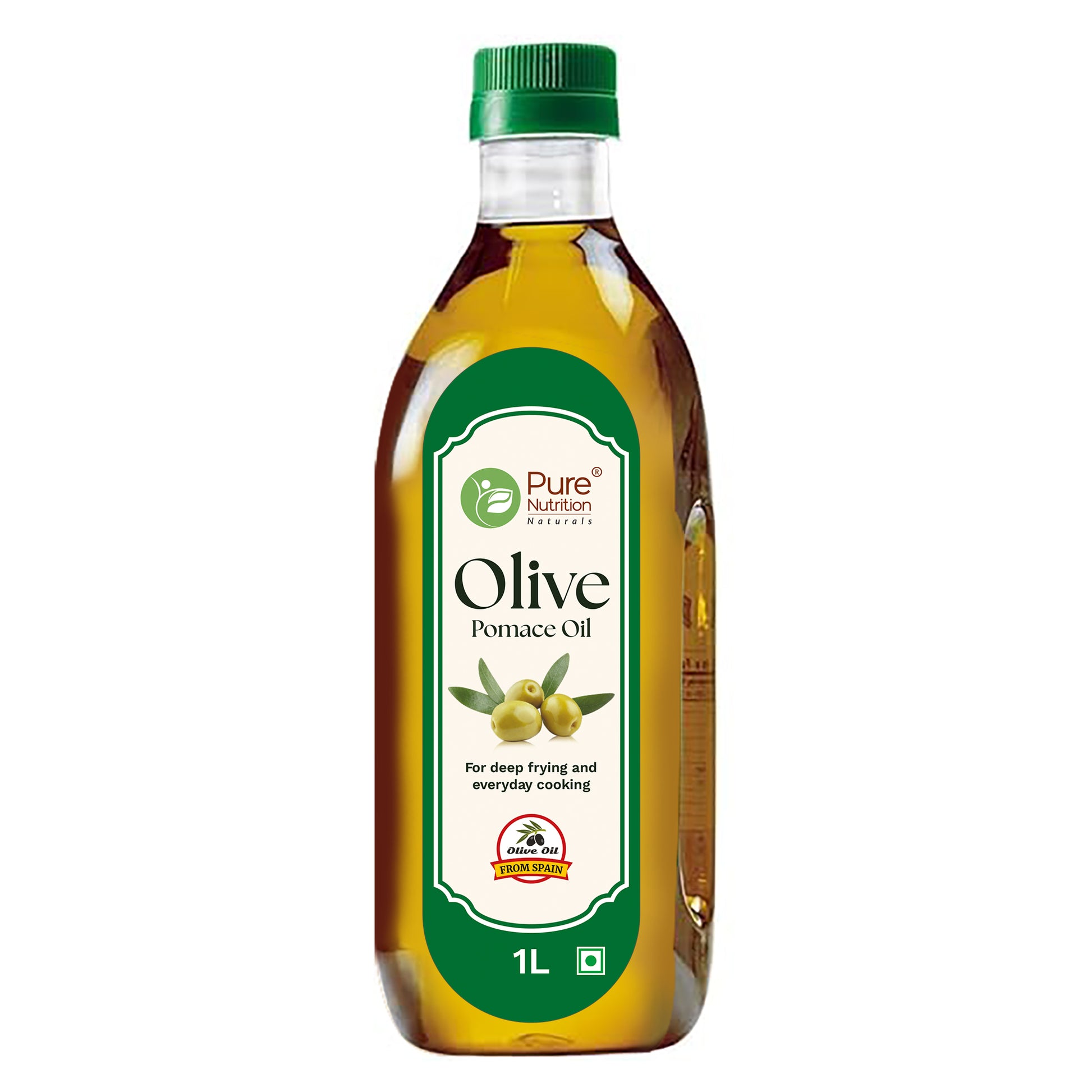
Pure Nutrition Pomace Olive Oil
A mild-tasting olive oil option for everyday Indian recipes, sautéing and occasional frying.
*Price and discount shown on the product page when checked. Verify the live offer before purchase.
Check current availability
Check AvailabilityPrepaid discount and shipping terms are subject to the live store offer.
How to choose high-quality olive oil in India
Before buying, look beyond the front label.
1. Check the exact category
Look for clear wording such as:
- Extra virgin olive oil
- Virgin olive oil
- Refined olive oil
- Extra-light olive oil
- Olive-pomace oil
Do not assume that every product labelled “olive oil” is extra virgin olive oil.
2. Read the ingredient panel
The ingredient list should clearly explain whether the bottle contains one type of olive oil or a blend.
If the product is a blended oil, check which oils are included and in what order.
3. Check the packaging
Olive oil is affected by light, heat and air. Prefer:
- Dark glass bottles
- Tins
- Sealed containers
- Secure caps
- Undamaged packaging
Avoid storing the bottle next to a hot stove or in direct sunlight.
4. Check the date
Look for:
- Best-before date
- Batch number
- Packaging date
- Harvest date, when available
- Country of origin
- FSSAI licence details
Use the oil while it is fresh. Buying a large bottle is not always better if it will remain open for many months.
5. Do not choose only by colour
A green colour does not automatically prove that an olive oil is better. Colour can vary naturally and may also be influenced by packaging or filtration.
Taste, aroma, freshness, category and packaging are more useful factors.
6. Be careful with “light” claims
“Extra light” usually means a lighter taste and colour. It does not mean fewer calories.
7. Compare price by use
Extra virgin olive oil is generally better suited to raw use and finishing. Refined and pomace olive oils may be more economical for daily cooking.
The most expensive bottle is not automatically the best choice for every recipe.
For more information about food categories and standards in India, refer to the relevant FSSAI food safety regulations.
One bottle or two bottles: what should you buy?
Option 1: One-bottle setup
If you want only one bottle, choose according to your cooking style:
- Choose extra virgin olive oil if you mostly prepare salads, dressings, dips and light meals.
- Choose refined or extra-light olive oil if you cook Indian food daily and prefer a mild taste.
- Choose pomace olive oil if you want an economical olive oil for regular cooking and occasional frying.
There will always be a compromise when one bottle is expected to do everything.
Option 2: Two-bottle setup
A two-bottle setup is more flexible:
- Extra virgin olive oil for salads, chutneys, marinades, finishing and gentle cooking.
- Refined, extra-light or pomace olive oil for regular Indian cooking and frying.
This approach lets you use the oil according to the dish instead of forcing one product to fit every cooking method.
Find the Olive Oil That Fits Your Kitchen
Compare the product category with your cooking style before choosing.
| Product | Best suited for | Flavour profile | Listed price | Explore |
|---|---|---|---|---|
| Pomace Olive Oil 1L |
Everyday Indian cooking, tadka and occasional frying | Mild / neutral | ₹689* | Check availability |
| Extra Virgin Olive Oil 500ml |
Salads, dressings, marinades and finishing | More pronounced olive flavour | ₹549* | View product |
| Extra Light Olive Oil 500ml |
Everyday cooking when you prefer a milder taste | Light / neutral | View live price | View product |
*Prices were observed on the live store and can change. Product availability must be checked on the linked page. Extra light refers to flavour and colour, not fewer calories.
Best olive oil choices by Indian cooking style
For South Indian cooking
For dosa, vegetable poriyal, sambar seasoning and coconut-based dishes, use refined, extra-light or pomace olive oil if you want a mild taste.
Extra virgin olive oil can be used in light sautéing, but its flavour may not suit every traditional recipe.
For North Indian cooking
For sabzi, dal, rajma, chole and curry preparation, refined or pomace olive oil is often more neutral and practical.
Extra virgin olive oil can be used for finishing or for lighter recipes.
For parathas
Use a mild refined or pomace olive oil. The oil should support the wheat and filling rather than dominate the taste.
For salads and raw eating
Extra virgin olive oil is the natural first choice. Its aroma and flavour are easier to appreciate when the oil is not heavily heated.
For baking
Refined or extra-light olive oil works well when you want a neutral taste. Extra virgin olive oil can be used in savoury baking or recipes where its flavour suits the ingredients.
What is the best olive oil brand in India?
The best olive oil brand depends on the product category, freshness, packaging, price and intended use.
Instead of choosing a brand only because it appears in a “top 10” list, ask:
- Is this extra virgin, refined, extra-light or pomace olive oil?
- Does the label clearly state the category?
- Is the bottle properly sealed?
- Is the product fresh?
- Does the flavour suit my cooking?
- Is the price reasonable for the way I use it?
- Are the batch and food registration details available?
If you are looking for an olive oil for regular Indian cooking, you can explore Pure Nutrition Pomace Olive Oil.
For salads, dressings and raw use, see Pure Nutrition Organic Extra Virgin Olive Oil.
You can also browse the complete Pure Nutrition oil collection and compare products by category and intended use.
Common mistakes when using olive oil
Heating the oil until it smokes
Smoking indicates that the oil has been overheated. Lower the flame and start again with fresh oil if the smell has become burnt.
Treating extra virgin olive oil as only a salad oil
Extra virgin olive oil can be used for cooking. The right heat level and the recipe matter.
Assuming pomace oil is the same as extra virgin olive oil
Pomace oil and extra virgin olive oil are different categories with different production methods, flavours and typical uses.
Buying “extra light” for fewer calories
Extra-light olive oil is not a low-calorie oil. The name refers to flavour and colour.
Reusing frying oil repeatedly
Repeated heating can affect the flavour and quality of oil. Avoid reusing oil that is dark, foamy, smoky or has an unpleasant smell.
Storing olive oil beside the stove
Heat and light can reduce freshness. Store the bottle in a cool, dark cupboard and close the cap after every use.
Frequently asked questions
Q. Which olive oil is best for cooking?
A. Extra virgin olive oil is best for salads, dressings, finishing and low-to-medium heat cooking. Refined, extra-light or pomace olive oil is more practical for regular Indian cooking, higher heat and frying.
Q. Which olive oil is best for Indian cooking?
A. For daily Indian cooking, refined olive oil, extra-light olive oil or olive-pomace oil is usually the most practical. Extra virgin olive oil is suitable for light cooking, marinades, chutneys and finishing.
Q. Can olive oil be used for Indian cooking?
A. Yes. Olive oil can be used for dal, vegetables, curries, sautéing, parathas and other Indian dishes. Choose the type according to the heat, flavour and cooking time.
Q. Can I use extra virgin olive oil for Indian cooking?
A. Yes. Use it for low-to-medium heat cooking, salads, chutneys, marinades and finishing. For prolonged high-heat cooking or frequent frying, refined or pomace olive oil may be more suitable.
Q. Which olive oil is best for frying?
A. Refined olive oil, extra-light olive oil or olive-pomace oil is generally more suitable for frying than extra virgin olive oil because of its milder flavour and refined composition. Do not allow any oil to smoke.
Q. Is pomace olive oil good for cooking?
A. Pomace olive oil can be used for regular cooking, sautéing, parathas and occasional frying. It is different from extra virgin olive oil and should be selected for its cooking performance, neutral taste and price.
Q. Is refined olive oil better than extra virgin olive oil?
A. Neither is automatically better. Extra virgin olive oil offers stronger flavour and is well suited to raw use and gentle cooking. Refined olive oil is milder and often more practical for higher-heat cooking.
Q. Is olive oil good for daily cooking?
A. Olive oil can be used for daily cooking when consumed in sensible quantities and stored correctly. Choose refined or pomace olive oil for a neutral everyday option, or extra virgin olive oil for gentle cooking and finishing.
Q. Which olive oil is best for cholesterol?
A. No olive oil cures or controls cholesterol on its own. Extra virgin olive oil can be part of a heart-conscious eating pattern, but your total diet, portion size, activity and medical treatment matter more. Speak to a healthcare professional if you have high cholesterol.
Q. Can olive oil be used for puris?
A. Yes, but refined or pomace olive oil is more practical if you specifically want to use olive oil for frying. Avoid overheating and do not repeatedly reuse the oil.
Q. Can I eat olive oil directly?
A. Yes. Extra virgin olive oil can be used in salads, dips, dressings or taken with food. Eating it directly does not make it calorie-free, so portion size still matters.
Q. Jaitun ka tel kha sakte hain?
A. Haan, jaitun ka tel khaane aur cooking ke liye use kiya ja sakta hai. Extra virgin olive oil salads, chutneys and finishing ke liye achha hai, while refined or pomace olive oil daily Indian cooking ke liye practical ho sakta hai.
Final recommendation
For most Indian kitchens, the best choice is not one universal bottle.
- Choose extra virgin olive oil for salads, dips, dressings, chutneys, marinades and gentle cooking.
- Choose refined or extra-light olive oil for everyday cooking when you prefer a mild taste.
- Choose olive-pomace oil for economical regular cooking, sautéing and occasional frying.
- Avoid heating any oil until it smokes.
- Store olive oil away from heat and sunlight.
- Select the product category that matches the way you actually cook.
The best olive oil for cooking is the one that suits your recipe, heat level, taste preference, budget and overall eating pattern.
Written by: Riddhi Shah
Clinical Nutritionist & Dietetics Expert
Master's in Clinical Nutrition and Dietetics | Certified Diabetic Educator | Advanced Diploma in Weight Management
Reviewed by: Anjali
Clinical Pharmacist & Healthcare Content Reviewer
🌿 Your kitchen, your choice
Find Your Perfect Olive Oil
From everyday Indian cooking to fresh salads, choose an olive oil that fits your recipes, flavour preferences and budget.

