
General adult baseline
A reference for healthy adults, not a universal optimal target for athletes or a personalised clinical prescription.
YOUR PERSONAL NUTRITION GUIDE
Find your daily protein goal in seconds.
Get a simple daily estimate based on your body weight, activity level and goal. Free, quick and easy to use.

Browse relevant Pure Nutrition collections to compare options that may fit your routine. Supplements are optional; your overall diet remains the foundation.
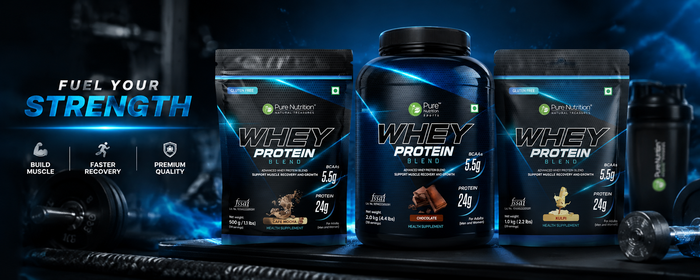
Protein powder
Explore whey options for convenient daily protein and training routines.
Explore collection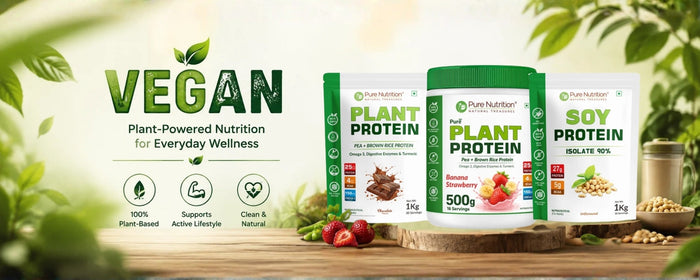
Plant-based
Browse plant-based protein options for vegan and plant-forward diets.
Explore collection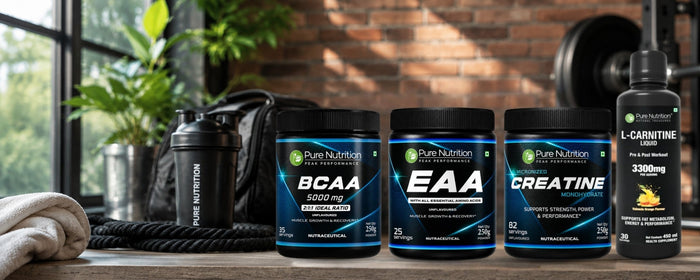
Workout support
Compare amino-acid products and check each formula and label carefully.
Explore collection
Training & recovery
Explore products grouped around active routines, training and recovery.
Explore collectionProtein needs vary with body weight, activity, training goals and health context. For healthy adults, 0.8 g per kg of body weight per day is a commonly cited reference baseline; people who train regularly may use different planning ranges.
A reference for healthy adults, not a universal optimal target for athletes or a personalised clinical prescription.
An educational planning range for endurance contexts; actual needs depend on training type, volume and intensity.
A range discussed for physically active adults in the ISSN position stand; it is not suitable for every person or situation.
Reference links: National Academies Dietary Reference Intakes and International Society of Sports Nutrition position stand.
Add your current weight in kilograms or pounds and, if you like, your age.
Select your activity level, goal, diet preference and preferred number of meals.
Get a suggested daily amount, an applicable range and a sample meal distribution.
Include a variety of protein-rich foods in your meals. Your diet preference highlights suitable options without changing the calculated protein requirement.

A versatile vegetarian option for curries, wraps and bowls.
Suitable food option
Pair with grains, vegetables or salads across meals.
Suitable food option
A plant-based option for stir-fries, curries and meal prep.
Suitable food option
A convenient vegetarian option for breakfast or snacks.
Suitable food option
A flexible eggetarian option for breakfast, lunch or dinner.
Suitable food option
Choose chicken for non-vegetarian meals or tofu for plant-based meals.
Suitable food optionDistributing protein across meals can be a practical way to meet your daily goal without being a rigid prescription. Calculate a result to see your selected split here.
Include a source of protein to start your day.
Calculate to see an exampleAdd protein-rich foods to your main meal.
Calculate to see an exampleChoose a light, protein-rich snack in the day.
Calculate to see an exampleInclude protein in your evening meal.
Calculate to see an exampleNo. Protein needs vary with body weight, activity, age, health and overall nutritional context.
Yes. Foods such as lentils, beans, soy, dairy and eggs can contribute to daily protein intake when suitable to your diet.
Not necessarily. Whole foods can meet protein needs for many people; supplements are optional and convenient when needed.
Convert your body weight to kilograms, then apply an appropriate reference factor for your activity and goal. This calculator uses 0.8 g/kg/day for the general adult baseline and documents its training-related ranges.
For healthy exercising adults, the ISSN position stand discusses 1.4–2.0 g/kg/day. The calculator uses a deterministic point within that range based on selected activity, but it is not a guarantee of muscle growth.
There is no single universal protein target for losing body fat. This calculator keeps the general baseline for sedentary or lightly active users and uses the documented training-related context for more active users.
Yes. A varied vegetarian diet can include protein from dairy, eggs, lentils, beans, soy and other foods. Your total requirement does not change just because you select a diet preference.
No. Protein powder is an optional convenience product, not a requirement. Food choice, appetite, budget and schedule all matter.
No. It is intended for adults as a general educational estimate. People under 18, people who are pregnant or breastfeeding, and people with kidney disease or other relevant conditions should seek individual guidance.
Important note: This calculator provides a general educational estimate, not a diagnosis or personalized medical advice. Protein needs may vary with age, health conditions, pregnancy, breastfeeding, training and overall nutritional intake. People with kidney disease or other relevant medical conditions should seek individualized advice from a qualified healthcare professional or registered dietitian. This calculator is intended for adults.

