

Best Time to Take Moringa Powder: Morning or Night?

Moringa powder is easy to add to a daily routine, but one question comes up again and again: should you take it in the morning, with food, or at night?
The short answer is that there is no proven universal best time for everyone. Morning use may be convenient because it is easy to remember. Taking moringa with breakfast or lunch may feel gentler if an empty stomach causes discomfort. Evening use can work for some people, but it is better to avoid taking it close to bedtime if it causes digestive discomfort or seems to affect your sleep.
There is no proven universal best time to take moringa powder. Morning or with a meal can be practical for building a routine; taking it with food may be gentler if an empty stomach causes nausea or loose stools. Follow your product label and ask a clinician before use with medicines, pregnancy, or breastfeeding.
Key takeaways
- Morning is a convenient option, not a medically proven requirement.
- You can take moringa powder with food if an empty stomach does not suit you.
- Night-time use is not a sleep treatment. Avoid it near bedtime if it causes discomfort or seems to affect sleep.
- Serving sizes vary by product, so follow the label rather than assuming one universal dose.
- Moringa should not replace prescribed medicines or professional medical advice.
Morning, with food, or at night?
The best time is usually the time that fits your routine and feels comfortable for your body. A consistent habit is easier to maintain than a complicated schedule.
| Timing | Why people choose it | What to keep in mind |
|---|---|---|
| Morning | Easy to remember and simple to add to breakfast or a morning drink | Empty-stomach use is optional. Stop or change the timing if you feel unwell. |
| With breakfast or lunch | May be easier on a sensitive stomach and fits naturally into a meal | Follow the product label. Food should not be described as a proven absorption enhancer. |
| Evening | Convenient if you miss a morning or lunchtime routine | Avoid taking it close to bedtime if it causes stomach discomfort or seems to affect sleep. |
For most adults, there is no need to chase a perfect clock time. Choose a practical time, use the label-directed serving, and pay attention to how you feel.
Morning use is often recommended online because it is easy to remember. That does not mean every person must take moringa before breakfast. If you prefer to take it with food, that is a reasonable option unless your product label or healthcare professional tells you otherwise.
Is moringa powder better on an empty stomach?
Not necessarily.
Some people prefer taking moringa powder before breakfast. Others find that an empty stomach makes them feel nauseous, gassy, or uncomfortable. Loose stools and stomach cramps can also occur with some supplements, especially when a person starts with more than their body tolerates.
Use this simple approach:
- If your stomach is comfortable and the label allows it: taking moringa before breakfast may be convenient.
- If you feel nausea, acidity, gas, cramps, or loose stools: try taking it with a meal, or stop and seek advice if the symptoms continue.
- If you take medicines or have a health condition: speak with a qualified clinician or pharmacist before starting.
- If you are pregnant, breastfeeding, planning surgery, or giving it to a child: get professional advice first.
There is no good reason to force an empty-stomach routine if it does not suit you. The goal is a sensible, tolerable routine not a harder one.
How to take moringa powder with water
Moringa powder has a strong, earthy taste. Water is the simplest way to take it, but it is not the only option.
Basic method
- Check the serving instruction on the product label.
- Add the recommended amount to room-temperature or lukewarm water.
- Stir well and drink it soon after mixing.
- If the taste is difficult, mix it into a smoothie, curd, dal, soup, or another suitable food.
You do not need boiling water to “activate” moringa. There is also no reliable evidence that adding lemon, honey, or juice creates a special health effect. These ingredients may make the drink easier to enjoy, but they do not turn moringa into a treatment.
If you are new to the product, do not assume that more is better. Follow the serving guidance, and adjust only with appropriate professional advice. If you experience ongoing digestive symptoms, stop using the powder and speak with a healthcare professional.
For more practical food ideas, see our guide to ways to use moringa powder in Indian meals.
When to take moringa for different goals
People often search for the best time to take moringa for energy, weight loss, digestion, or blood sugar. These goals need careful wording because timing alone does not create a health outcome.
| Goal | A sensible way to think about timing |
|---|---|
| General nutrition | Choose a convenient time and follow the label. Moringa is not a replacement for a varied diet. |
| Morning energy | Morning use may fit your routine, but do not assume it will produce a guaranteed energy boost. |
| Exercise | Some people may prefer taking it before a workout because it fits their schedule. It should not be presented as a proven performance aid. |
| Weight management | There is no established timing rule that makes moringa cause fat loss. Food choices, total energy intake, activity, sleep, and medical factors matter far more. |
| Blood sugar concerns | Do not use moringa to replace diabetes treatment, medication, or monitoring. Ask a clinician before using it. |
| Digestion | Taking it with food may feel more comfortable if the powder irritates your stomach. Persistent symptoms need medical assessment. |
Moringa may be part of a balanced eating pattern, but it should not carry the whole burden of a health goal. If you are taking it for a specific condition, discuss that decision with a qualified professional.
Moringa dosage: follow the product label
Serving sizes vary between moringa products. Differences in concentration, plant part, processing, packaging, and serving instructions all matter.
For Pure Nutrition Organic Moringa Powder, the product page currently gives a direction of mixing one teaspoon, listed as 5 g, with water, juice, or smoothies. Treat that as the product’s current label guidance not as a universal medical dose for every moringa powder.
Before using any supplement, check:
- the serving size
- the ingredient list
- the plant part used
- storage instructions
- allergen information
- the current label and expiry date
Do not increase the amount simply because you want faster results. More powder can also mean more digestive discomfort. If you take prescription medicines or several supplements, ask a pharmacist or clinician to check whether moringa is appropriate for you.
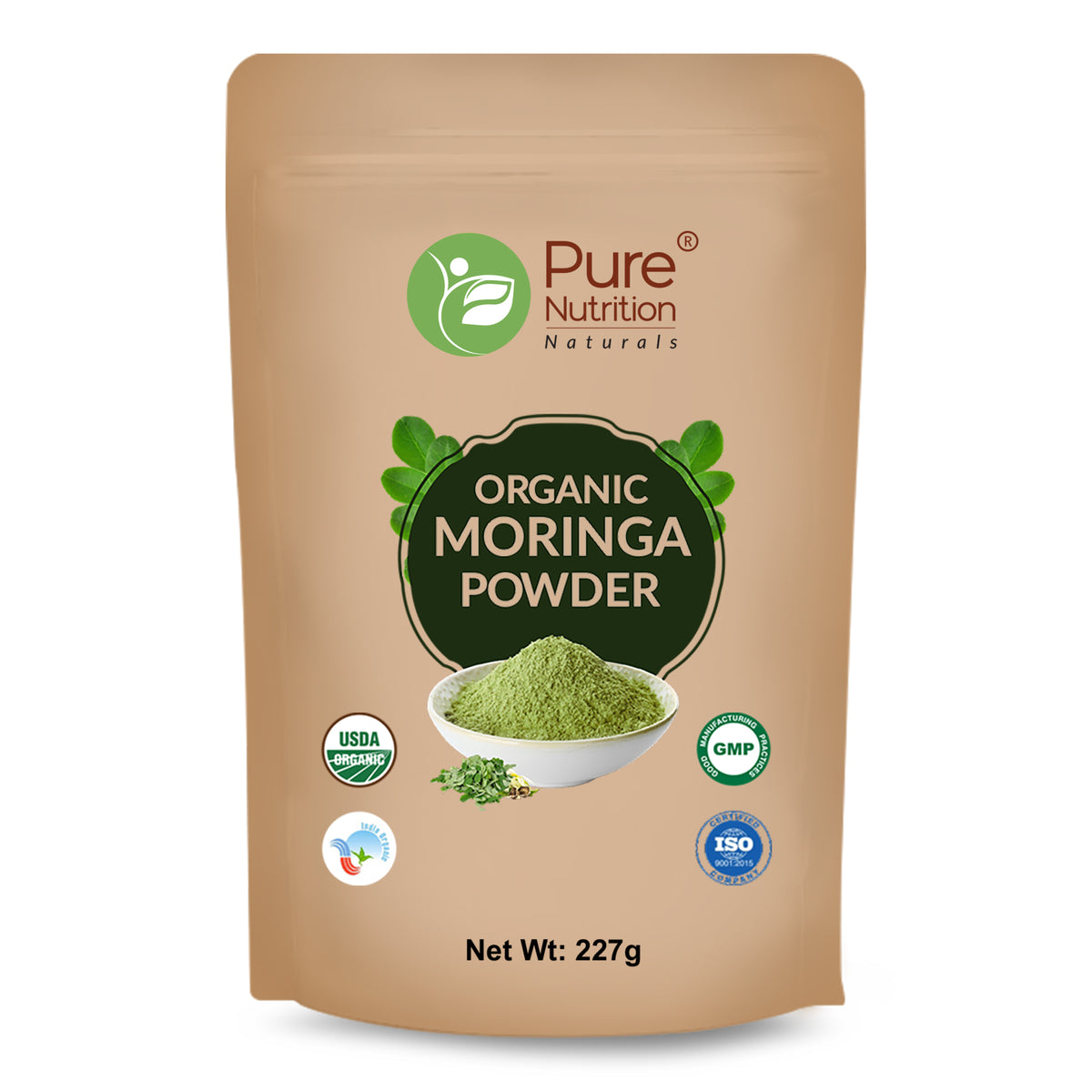
PURE NUTRITION · DAILY ROUTINE
Organic Moringa Powder - 227 g
Certified organic*Extra 5% off on prepaid orders. Free shipping is advertised on the product page; confirm current shipping terms at checkout.
Availability notice: The product page was showing Sold out when checked. Visit the official page for the current stock status.
Check Availability*The product page states that the product is certified organic. Listed price and offers may change. Follow the product label; consult a healthcare professional when appropriate.
Possible side effects and safety
Moringa powder is tolerated by many people, but “natural” does not mean suitable for everyone. Possible digestive effects can include:
- nausea
- gas
- stomach cramps
- loose stools
- changes in bowel habits
If symptoms are severe, continue for more than a short period, or worry you, stop using the product and seek medical advice.
Ask a clinician before using moringa if you:
- are pregnant or breastfeeding
- are considering it for a child
- take diabetes or blood-pressure medicine
- take medicines with a narrow safety margin
- have liver or kidney disease
- have a planned surgery
- have allergies or use several supplements
- want to use it for a diagnosed health condition
Do not stop or change prescribed medicine because of something you read in a blog post. Supplements can vary in strength and may not be suitable alongside every medicine. A pharmacist can help you review your personal situation.
If you are unsure whether a supplement fits your diet, medicines, or health goals, you can book a free nutrition consultation.
What research says about moringa benefits
Moringa leaves contain nutrients and plant compounds, but the nutrition profile can vary by plant part, growing conditions, processing, and serving size. Research on moringa has examined areas such as blood sugar, lipids, inflammation, and other outcomes. Human studies remain limited and vary in design, preparation, and quality.
A useful way to read the evidence is:
- What is reasonably clear: moringa leaf powder is a food or supplement ingredient that can contribute nutrients.
- What is still being studied: possible effects on blood sugar, blood lipids, inflammation, and other health measures.
- What should not be promised: guaranteed weight loss, detoxification, diabetes treatment, sleep improvement, or disease prevention.
A PubMed scoping review found that human research exists, but the evidence is not strong enough to treat moringa as a default diabetes therapy. A systematic review also described the clinical evidence as limited and variable. More recent research should be read carefully because studies may use different extracts, doses, or preparations from the powder in your kitchen.
The sensible approach is to enjoy moringa as one possible food ingredient, not as a substitute for medical care.
A simple Indian routine
You do not need an elaborate wellness routine to use moringa powder.
Breakfast option
Mix the label-directed serving into water or a smoothie if you tolerate it. Take it with breakfast if an empty stomach feels uncomfortable.
Meal option
Add the powder to a suitable food such as dal, curd, or another meal where the earthy taste works for you. Check the product instructions before heating or combining it with other ingredients.
The main aim is consistency and comfort. If you miss a day, do not double the next serving. If the powder makes you feel unwell, change the timing or stop and seek advice.
You can also explore nutrition and herbal powders, but choose products according to your own needs and the instructions on the label.
Frequently asked questions
1. What is the best time to take moringa powder?
A. There is no proven universal best time. Morning may be convenient because it is easy to remember, while taking it with breakfast or lunch may feel gentler for people with sensitive stomachs. Follow the product label and choose a routine you can tolerate.
2. Is moringa better in the morning or at night?
A. Morning is often easier to remember, but it is not proven to be better for everyone. Night use may be convenient if it fits your schedule. Avoid taking moringa close to bedtime if it causes digestive discomfort or seems to affect your sleep.
3. Can I take moringa powder on an empty stomach?
A. Some people can, but it is not required. If you notice nausea, gas, cramps, acidity, or loose stools, take it with food or stop using it and seek advice if the problem continues.
4. Should I take moringa before or after food?
A. Either may be suitable for different people. Before food can fit a morning routine, while after or with food may be more comfortable for a sensitive stomach. Follow the product label and do not force a timing that makes you feel unwell.
5. Can I mix moringa powder with hot or cold water?
A. Room-temperature or lukewarm water is a simple choice. Very hot water is not needed to create a special benefit. You can also mix moringa with a smoothie or suitable food if that makes the taste easier to manage.
6. Can I take moringa powder every day?
A. Daily use depends on the product, serving instructions, your health, and any medicines you take. Follow the label rather than assuming daily use is right for everyone. Ask a clinician or pharmacist if you have a medical condition or take prescription medicine.
7. How many days should I take moringa powder?
A. There is no universal number of days that applies to every person or product. Use the label as your starting point and review the decision if you develop symptoms. Do not continue indefinitely for a medical condition without professional guidance.
8. Is moringa powder good for weight loss?
A. Moringa powder should not be presented as a weight-loss treatment. Timing it in the morning or at night does not by itself cause fat loss. Weight management depends on the wider pattern of food, activity, sleep, and health factors.
9. What should I avoid when taking moringa powder?
A. Avoid exceeding the label-directed serving, using it to replace prescribed treatment, or combining several supplements without checking first. Take extra care if you are pregnant, breastfeeding, have a health condition, or use medicines.
10. Can I take moringa powder with medicines?
A. Do not assume that it is suitable with every medicine. Moringa may not be appropriate alongside some treatments, and supplement strength can vary. Ask a doctor or pharmacist for advice based on your medicines and health history.
11. Who should avoid moringa powder?
A. People who are pregnant, breastfeeding, giving supplements to children, preparing for surgery, managing chronic disease, or taking multiple medicines should ask a qualified professional before use. Anyone who develops significant symptoms should stop and seek advice.
12. Can moringa powder replace vegetables or a balanced diet?
A. No. Moringa powder can be one food ingredient, but it cannot replace a varied diet that includes vegetables, fruit, pulses, whole grains, healthy fats, and adequate fluids.
The takeaway
There is no single clock time that is proven to make moringa powder work best for everyone. Morning may be convenient, while taking it with breakfast or lunch may be more comfortable if an empty stomach causes symptoms. Night use can suit some routines, but it is not a sleep remedy and may not be ideal close to bedtime.
Follow the current product label, start cautiously, and listen to your body. If you take medicines, have a health condition, are pregnant or breastfeeding, or want to use moringa for a specific medical goal, speak with a qualified healthcare professional first.
Disclaimer: This article is for general education. It does not diagnose, treat, cure, or prevent any disease and does not replace advice from a qualified doctor, dietitian, pharmacist, or other healthcare professional.
Make Moringa Part of Your Routine
Explore the product, discover simple ways to use moringa in everyday meals, or get guidance for your nutrition needs. Choose what helps you most.

