

When to Take Multivitamin Tablets: Morning, Night or With Food?

You may take your multivitamin every day, but still wonder whether breakfast, lunch, dinner, or bedtime is the right choice.
The short answer is simple: most multivitamins are best taken during or shortly after a meal that you can follow consistently. A meal containing some dietary fat may support the absorption of vitamins A, D, E, and K.
Breakfast or lunch may suit some people. Dinner can work too. The best routine depends on the product label, your meal pattern, your tolerance, and any medicines or other supplements you use.
Key Takeaways
- Most multivitamin tablets are best taken with or shortly after food.
- Dietary fat can help the body absorb vitamins A, D, E, and K.
- Breakfast, lunch, or dinner can all work if the routine is consistent.
- Night-time use is usually acceptable with dinner if the supplement does not affect your sleep.
- Always follow the current product label, especially when the formula contains iron or requires more than one tablet daily.
What Is the Best Time to Take Multivitamin Tablets?
The best time to take most multivitamin tablets is during or shortly after a meal you can follow consistently, often breakfast or lunch. Include some dietary fat to support absorption of vitamins A, D, E, and K. Dinner is also acceptable if it suits your routine. Follow the product label, especially when the formula contains iron or requires more than one tablet daily.
Why Should You Take Multivitamins With Food?
Food can make a multivitamin easier to tolerate and may support the absorption of certain nutrients.
Many multivitamin formulas contain both water-soluble and fat-soluble vitamins. Vitamins A, D, E, and K are fat-soluble, so a meal containing some fat can help your body absorb them.
You do not need a heavy or oily meal. Foods such as eggs, nuts, seeds, yoghurt, dal cooked with oil, avocado, or a regular home-cooked meal may provide enough dietary fat.
Water-soluble vitamins include vitamin C and the B-complex vitamins. These do not depend on dietary fat in the same way, but taking a combination formula with food may be more comfortable for people who experience nausea or acidity.
A multivitamin is not a replacement for a varied diet. Whole foods also provide fibre, protein, minerals, and plant compounds that a tablet cannot fully reproduce.
For a broader explanation of nutrient timing, see the Cleveland Clinic guide to taking vitamins and the NIH vitamin and mineral fact sheets.
Morning vs Night: When Should You Take Multivitamins?
There is no single hour that works best for everyone.
Taking a Multivitamin in the Morning
Breakfast may be a convenient time because it is easy to connect the tablet with an existing habit.
Morning use may suit you if:
- You eat breakfast regularly.
- You tend to forget supplements later in the day.
- Your formula contains B vitamins or herbs that feel stimulating.
- You prefer completing your supplement routine early.
Do not force morning use if you regularly skip breakfast. Taking a multivitamin with lunch may be more practical than keeping it beside an untouched breakfast plate.
Taking a Multivitamin at Lunch
Lunch can be a good option for people who:
- Have a light breakfast.
- Eat a more complete meal at midday.
- Take morning medicines that need to be separated from supplements.
- Experience nausea when taking tablets early in the day.
A consistent lunch routine may support better adherence than an ideal schedule that you rarely follow.
Taking a Multivitamin at Dinner
Dinner is also a reasonable option if it is your most reliable meal.
It may suit people who:
- Skip breakfast.
- Eat their largest meal at night.
- Experience stomach discomfort when taking supplements earlier.
- Remember supplements better after dinner.
Try not to take the tablet immediately before lying down, particularly if it causes reflux or stomach discomfort.
Taking a Multivitamin Before Bed
Taking a multivitamin immediately before bed is not necessary for better absorption.
Some people tolerate it well. Others may feel more alert, especially when the formula contains B vitamins or stimulating herbal ingredients. If your sleep feels disturbed, move the supplement to breakfast, lunch, or an earlier dinner.
| Routine | When it may suit you |
|---|---|
| Breakfast | You eat regularly and want an easy morning habit |
| Lunch | Breakfast is light or often skipped |
| Dinner | Your evening meal is the most consistent |
| Before bed | Only if the product is well tolerated and does not disturb sleep |
How to Take Multivitamin Tablets Correctly
The safest routine begins with the product label.
1. Check the serving size
Some products require one tablet daily. Others may require more than one tablet divided across meals.
Do not assume that every multivitamin follows the same schedule.
2. Take the approved dose with water
Swallow the tablet with a full glass of water unless the product label gives different instructions.
Water is the simplest default because it does not add calcium, caffeine, or other compounds that may affect certain minerals.
3. Take it during or shortly after food
Food may reduce nausea and support absorption of fat-soluble vitamins.
If your product label says “after meals,” follow that direction rather than changing the timing based on general advice.
4. Do not double the dose
If you forget one dose, check the product instructions. Do not automatically take two tablets the next day.
MedlinePlus advises taking multivitamins according to the label and around the same time each day. Read the MedlinePlus multivitamin guidance.
5. Do not stack similar supplements without checking
A multivitamin may already contain vitamin D, iron, zinc, calcium, or vitamin A.
Adding separate supplements without checking the total amount can lead to unnecessary or excessive intake.
Can You Take a Multivitamin With Milk, Tea or Coffee?
It depends on the nutrient combination in the product.
Multivitamins With Milk
Milk contains fat, which may support absorption of fat-soluble vitamins. However, milk also contains calcium.
Calcium can interfere with iron absorption in some situations. Therefore, if your multivitamin contains iron, water with a meal may be a simpler option than taking it with milk.
Check the product label or ask a pharmacist if you are taking iron because of a diagnosed deficiency.
Multivitamins With Tea or Coffee
Tea and coffee should not automatically be described as completely forbidden. However, their compounds may affect the absorption of certain minerals, particularly iron.
If your multivitamin contains iron:
- Avoid taking it with tea or coffee when possible.
- Use water instead.
- Follow the product label.
- Ask a pharmacist about timing if you take an iron supplement separately.
The NIH iron fact sheet explains that iron absorption depends on the form of iron, food pattern, and other dietary factors.
The Simple Default
When you are unsure, take your multivitamin with a regular meal and water.
That routine is easy to repeat and avoids many unnecessary timing complications.
What If Your Multivitamin Contains Iron or Calcium?
Iron and calcium require more careful planning than a general multivitamin routine.
Iron
Iron-only supplements may be absorbed differently from a combination multivitamin. Some people absorb iron better away from food, while others experience nausea unless they take it with food.
Do not change iron timing without checking the product instructions or speaking with a healthcare professional.
Vitamin C from foods such as amla, guava, citrus fruits, tomatoes, and capsicum can support absorption of plant-based iron. However, this does not mean that everyone should start taking additional iron.
Calcium
Calcium carbonate is generally taken with food, while calcium citrate can be taken with or without food. The correct choice depends on the product and your individual needs.
The NIH calcium fact sheet explains that calcium supplements should be used according to the label and that smaller doses may be absorbed more efficiently than a very large single dose.
Medicines
Some medicines require careful separation from minerals.
Speak with a doctor or pharmacist if you take:
- Thyroid medicines
- Blood thinners
- Certain antibiotics
- Medicines for osteoporosis
- Regular antacids
- Prescription iron or calcium
- Medicines for kidney or liver disease
Do not guess the timing of a supplement when prescription medicines are involved.
Pure Nutrition Product Label Guidance
Pure Nutrition Multivitamin for Men is a vegetarian formula containing vitamins, minerals, herbs, and other ingredients.
The current Pure Nutrition product page lists the direction as one tablet twice daily after meals. Product directions can change, so always check the label on the pack you receive and follow the latest approved instructions.
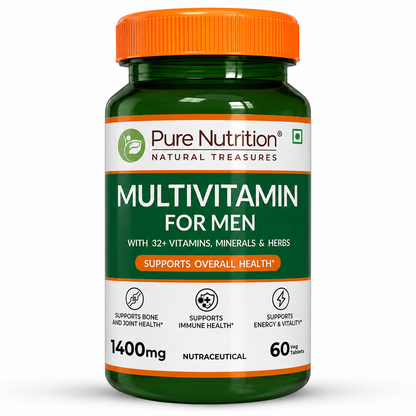
Multivitamin for Men - 60 Tablets
Check current prepaid offers and shipping eligibility on the product page.
Review the current label, ingredients, dosage and availability before ordering.
Do not use a general article about multivitamin timing to override the product label.
If you are unsure whether a formula suits your diet, medicines, or health goals, you can use the Pure Nutrition supplement quiz or request a free supplement consultation.
Who Should Ask a Doctor or Pharmacist First?
Most healthy adults can discuss a standard multivitamin with a pharmacist. Certain situations need more care.
Speak with a qualified healthcare professional before starting a supplement if you:
- Are pregnant, planning pregnancy, or breastfeeding
- Have kidney or liver disease
- Have diagnosed anemia or iron deficiency
- Take thyroid medicine or blood thinners
- Use several supplements at the same time
- Have a digestive condition affecting absorption
- Have persistent nausea, reflux, or abdominal pain
- Are taking a multivitamin for a child or teenager
Tiredness, hair loss, poor concentration, or weakness can have many causes. These symptoms alone cannot confirm a vitamin deficiency.
Frequently Asked Questions
Q. What is the best time to take multivitamin tablets?
A. For most products, take the tablets during or shortly after a meal that you can follow consistently. Breakfast, lunch, or dinner can all work. Include some dietary fat when appropriate and follow the specific product label.
Q. Can I take multivitamins at night?
A. Yes, you can usually take a multivitamin at night with dinner if the product label allows it and you tolerate it well. If it affects your sleep, causes reflux, or makes you feel alert, move it earlier in the day.
Q. Should I take multivitamins before or after food?
A. Most combination multivitamins are better tolerated during or shortly after food. Food may also support absorption of vitamins A, D, E, and K. Always follow the directions printed on the product label.
Q. Can I take a multivitamin with milk?
A. Sometimes, but it depends on the formula. Milk provides fat, yet its calcium may affect iron absorption in some products. If your multivitamin contains iron, water with a meal may be a simpler option.
Q. What happens if I take a multivitamin on an empty stomach?
A. Some people may experience nausea, acidity, cramps, or stomach discomfort. Fat-soluble vitamins may also be less effectively absorbed without dietary fat. Taking the product with food is often more comfortable.
Q. Can I take multivitamins with tea or coffee?
A. It is better to take the tablet with water, especially if the formula contains iron. Tea and coffee may affect the absorption of certain minerals, but the effect depends on the product and the amount consumed.
Q. Can I take multivitamins with cough medicine?
A. There is no universal answer because cough medicines contain different active ingredients. Ask a pharmacist if you take regular medicines, have a chronic condition, or use several supplements.
Q. What should I do if I miss a multivitamin dose?
A. Check the product label. In general, do not double the next dose unless a healthcare professional specifically instructs you to do so.
Q. Can I take a multivitamin with iron and calcium?
A. Some products contain both, but the ideal timing depends on the amounts and formulation. Do not add separate iron or calcium supplements without checking with a doctor or pharmacist.
Q. How do I know whether I need a multivitamin?
A. A multivitamin may be useful when your diet is restricted, irregular, or missing important food groups. A blood test and professional assessment are more reliable than symptoms alone for identifying a deficiency.
Summary
- Take most multivitamin tablets with or shortly after a consistent meal.
- Include some dietary fat to support absorption of vitamins A, D, E, and K.
- Breakfast, lunch, or dinner can work depending on your routine.
- Night-time use is acceptable for many people, but move the dose earlier if it affects sleep.
- Use water as the default drink when you are unsure.
- Check the label carefully when the formula contains iron, calcium, herbs, or multiple daily doses.
- Ask a healthcare professional before starting supplements if you take medicines or have a medical condition.
Written by: Riddhi Shah
Clinical Nutritionist & Dietetics Expert. Master's in Clinical Nutrition and Dietetics, Certified Diabetic Educator, and Advanced Diploma in Weight Management.
Reviewed by: Anjali
Clinical Pharmacist & Healthcare Content Reviewer. Profile-listed education includes B.Pharm, M.Pharm, PharmD, and D.Pharm
Disclaimer: This article is for educational purposes only and is not medical advice. Consult a qualified healthcare professional before starting any supplement. Do not exceed the recommended daily dose. Pure Nutrition supplements should be used according to the current product label and a varied, balanced diet.
Make Your Daily Nutrition Routine Simpler
Explore your options, understand your supplement label, and find the guidance that fits your needs.
Explore Multivitamin for Men
Check the ingredients, serving instructions, current price, and availability before choosing your supplement.
View Product DetailsFind Your Supplement Match
Answer a few questions to explore supplement options based on your preferences and goals.
Take the QuizNeed Personal Guidance?
Have questions about supplement timing, ingredients, or choosing a product? Explore consultation options.
Explore ConsultationCheck Before You Start
Review the product's current directions and ingredients. Ask a doctor or pharmacist about possible medicine interactions.
Review Product Label
