

How to Take Pre-Workout: Dosage, Timing, Water and Safety Guide

Pre-workout can support energy, focus and training performance, but only when you use it correctly. Follow the product label, start with a smaller serving if you are new, mix it with water and usually take it 30–60 minutes before training.
Some products recommend a shorter window, such as 20–30 minutes. Always follow the current label of your product.
Key takeaways
- Start with ¼–½ serving if you are new to pre-workout or caffeine.
- Check caffeine in milligrams instead of judging strength by scoop size.
- Mix pre-workout with the amount of water recommended on the label.
- Take it early enough to avoid sleep disruption.
- Never dry scoop pre-workout.
- Avoid casually combining it with coffee, energy drinks or other stimulant supplements.
What is pre-workout?
Pre-workout is a supplement taken before exercise. It usually comes as a powder that you mix with water.
Depending on its ingredients, it may support:
- Alertness and energy.
- Focus during training.
- Exercise endurance.
- Perceived workout intensity.
- Muscle pump.
Pre-workout is optional. It cannot replace proper sleep, regular training, a balanced diet or adequate protein intake.
If you are unsure whether your diet supports your training goals, you can use the Daily Protein Calculator to estimate your daily protein needs.
How to take pre-workout correctly
Follow these steps before your workout.
Before your next workout: Check the caffeine per serving, follow the product label, and choose a pre-workout that fits your training time.
New to pre-workout? Start with a smaller serving if the label allows it, and never dry scoop.
1. Read the complete product label
Do not rely only on the front of the container. Check:
- Serving size in grams.
- Caffeine per serving.
- Recommended mixing instructions.
- Maximum daily serving.
- Other stimulants or active ingredients.
- Warnings and age restrictions.
A scoop is not a standard measurement across all brands. One scoop may contain a very different amount of powder or caffeine from another product.
In India, caffeine information should be clearly declared on the product label. You can refer to the FSSAI labelling and display requirements when checking a supplement label.
2. Start with a smaller serving
If you have never used pre-workout before, begin with ¼–½ serving rather than taking a full scoop immediately.
This gives you a chance to understand how your body responds. You may notice changes in energy, focus, heart rate, digestion or sleep.
A smaller serving is also sensible if you:
- Rarely drink coffee or tea.
- Are sensitive to caffeine.
- Train late in the evening.
- Have previously experienced jitters.
- Are trying a new product with a different formula.
3. Mix it with water
Mix pre-workout with the amount of water stated on the label.
Most products are mixed with approximately 200–400 ml of water, but the correct amount depends on the formula and your taste preference.
Use a shaker or glass. Stir or shake until the powder is reasonably mixed.
Do not dry scoop pre-workout. Swallowing concentrated powder can increase the risk of choking, coughing, stomach discomfort and an unpleasant stimulant response.
4. Take it before training
Most caffeine-based pre-workouts are taken around 30–60 minutes before exercise.
The exact timing can vary because of:
- The product’s ingredients.
- Whether you have eaten recently.
- Your caffeine tolerance.
- Your workout intensity.
- Your individual response.
The current NXTShift product page recommends mixing one scoop, approximately 17 grams, with 200–250 ml of water and consuming it 20–30 minutes before exercise. This is product-specific guidance, so check the current packaging before use. You can view the NXTShift pre-workout product details.
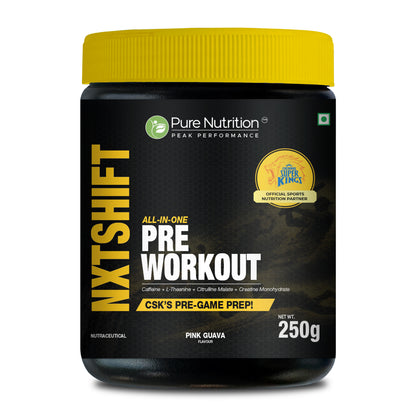
NXTShift Pre-Workout
Review the current ingredient list, serving instructions, warnings and availability before ordering. Always follow the product label.
5. Count all your caffeine
Your daily caffeine intake may come from more than pre-workout.
Remember to include:
- Coffee.
- Tea.
- Energy drinks.
- Cola.
- Caffeine tablets.
- Fat burners.
- Other workout supplements.
For most healthy adults, the FDA states that up to 400 mg of caffeine per day is generally not associated with dangerous negative effects. This is not a personal target, and some people need much less.
Your tolerance may be lower if you are sensitive to caffeine, sleep poorly, train late or consume several caffeinated drinks during the day.
6. Drink water during your workout
Pre-workout does not remove the need to hydrate.
Drink water according to your thirst, workout duration, sweat loss and training environment. If you train outdoors, in a hot gym or for a long session, you may need to pay closer attention to fluid and electrolyte intake.
Do not assume that drinking a very large amount of water will make an excessive pre-workout serving safe.
7. Pay attention to your response
A mild tingling sensation may occur with beta-alanine. It is commonly called paresthesia and usually passes with time.
However, stop using the product and seek medical help if you experience:
- Chest pain.
- Fainting.
- Breathing difficulty.
- Severe or persistent palpitations.
- Severe dizziness.
- Confusion.
- Symptoms that feel unusual or intense.
How much pre-workout should I take?
The right amount depends on the product label, caffeine content, your tolerance and your health.
| User | Sensible starting approach |
|---|---|
| New to pre-workout | ¼–½ serving |
| New to caffeine | Start low and monitor your response |
| Experienced user | Use only the recommended serving |
| Caffeine-sensitive user | Consider a lower-caffeine or stimulant-free product |
| Evening trainee | Avoid or choose a caffeine-free formula |
| Considering two scoops | Do not exceed the label without professional guidance |
Do not judge a product by scoop size alone. Check the serving weight and caffeine amount.
A large scoop does not automatically mean a better workout. It may simply increase the risk of jitters, nausea, disturbed sleep or an uncomfortable heartbeat.
How much pre-workout should a beginner take?
A beginner should usually start with ¼–½ serving, provided the product label allows it.
Take the smaller amount on a day when you can observe your response. Avoid testing a new pre-workout immediately before an important competition, long drive or late-night study session.
If the smaller serving feels too strong, do not increase the dose. Consider reducing your caffeine from other sources or choosing a lower-stimulant product.
When should you take pre-workout?
For many products, 30–60 minutes before exercise is a practical starting window.
Some products are designed to be taken 20–30 minutes before training. Others may contain ingredients that affect how quickly you notice their effects.
Early-morning workouts
If you train early, you may be more sensitive to caffeine because you have not consumed any caffeine for several hours.
Start with a smaller serving if needed. If pre-workout causes nausea on an empty stomach, try a light snack such as:
- A banana.
- Toast.
- A few dates.
- Oats.
- A small portion of rice.
Workouts after a meal
A heavy meal may make you feel uncomfortable if you take pre-workout immediately afterwards.
Allow enough time for digestion, especially before intense training. A lighter snack may be easier to tolerate than a large meal.
Evening workouts
Caffeine can affect sleep even when you do not feel unusually energetic.
Avoid taking a stimulant-based pre-workout close to bedtime. If you train in the evening, consider a caffeine-free option or speak with a healthcare professional about what is suitable for you.
Can you take pre-workout on an empty stomach?
Some people can tolerate pre-workout on an empty stomach. Others may experience nausea, stomach discomfort, shakiness or dizziness.
Your response depends on:
- Caffeine sensitivity.
- The product formula.
- Your last meal.
- Workout intensity.
- Hydration.
- Your personal digestion.
If you feel uncomfortable, try taking it after a small, easily digested snack. Do not force yourself to use pre-workout on an empty stomach.
How should you read a pre-workout label?
The label can tell you more than the product name or marketing claims.
| Label detail | Why it matters |
|---|---|
| Serving size in grams | Shows how much powder one serving contains |
| Caffeine in milligrams | Helps you calculate your total daily caffeine |
| Beta-alanine | May cause temporary tingling |
| Citrulline or citrulline malate | Used in formulas targeting exercise performance and pump |
| Creatine monohydrate | Usually taken consistently over time |
| Proprietary blend | Makes individual ingredient amounts harder to assess |
| Recommended serving | Helps prevent accidental overuse |
| Warnings | May identify age, pregnancy, medical or medication concerns |
The NIH Office of Dietary Supplements explains that evidence and effective amounts vary across common exercise supplements. A formula containing more ingredients is not automatically better.
Common pre-workout ingredients explained
Caffeine
Caffeine may increase alertness and reduce the feeling of tiredness during exercise. It can also cause jitters, anxiety, faster heart rate or sleep problems in sensitive people.
Beta-alanine
Beta-alanine may cause temporary tingling or flushing. This sensation is not the same as an allergic reaction, but stop using the product if you experience severe or unusual symptoms.
Citrulline
Citrulline is included in many products designed to support blood flow and workout performance. The evidence depends on the dose, formula and type of exercise.
Creatine
Creatine is generally used through regular daily intake rather than relying only on workout timing. If your pre-workout already contains creatine, check the amount before adding another creatine supplement.
You can read more about choosing and combining products in this NXTShift supplement stack guide.
Can you take pre-workout and creatine together?
Many people can take pre-workout and creatine together, provided the product label allows it and there is no medical reason to avoid either supplement.
The two supplements serve different purposes:
- Pre-workout is usually taken before exercise for acute energy or focus.
- Creatine is generally used consistently to support training over time.
Check whether your pre-workout already contains creatine. Adding a separate product may unnecessarily duplicate the ingredient.
If you have kidney disease, take regular medication or have another medical concern, speak with a healthcare professional first.
Can you take pre-workout with coffee?
You can physically mix or consume them on the same day, but the caffeine adds up.
A cup of coffee, tea or an energy drink may contain more caffeine than you expect. Combining it with a high-caffeine pre-workout may increase the chance of:
- Jitters.
- Anxiety.
- Headache.
- Nausea.
- Fast heartbeat.
- Sleep disturbance.
Do not treat coffee as harmless simply because it is a familiar drink. Count the total caffeine from everything you consume.
If you already had coffee, check the pre-workout label before taking it. When in doubt, use a smaller serving or skip the stimulant supplement that day.
Pre-workout side effects
Pre-workout side effects are often linked to caffeine, stimulant ingredients, serving size or personal sensitivity.
Possible side effects include:
- Feeling shaky or restless.
- Increased anxiety.
- Headache.
- Nausea.
- Stomach discomfort.
- Faster heartbeat.
- Sleep disruption.
- Temporary beta-alanine tingling.
The risk may increase when you:
- Take more than the recommended serving.
- Combine several caffeine sources.
- Use pre-workout late at night.
- Take it without enough food when your body is sensitive.
- Ignore symptoms and continue increasing the dose.
If side effects are severe, persistent or worrying, stop using the product and seek medical help.
Who should avoid pre-workout or seek advice first?
Speak with a healthcare professional before using stimulant-based pre-workout if you:
- Have high blood pressure.
- Have a heart condition.
- Have significant anxiety or panic symptoms.
- Are pregnant or breastfeeding.
- Take medication regularly.
- Have kidney disease or another chronic condition.
- Are under 18.
- Have previously reacted badly to caffeine or stimulants.
You can also use the Pure Nutrition Free Consultation for general product guidance. Medical conditions and medication interactions should be discussed with your doctor or qualified healthcare professional.
Common mistakes people make with pre-workout
Taking a full scoop immediately
A full serving may be too strong for a first-time user. Start lower and assess your response.
Taking it too close to bedtime
Even if you fall asleep normally, caffeine can affect sleep quality. Late workouts may be better supported by a non-stimulant product.
Dry scooping
Dry scooping does not make pre-workout work faster. It creates a concentrated mouthful of powder and can cause coughing, choking or stomach discomfort.
Mixing it with several stimulants
Coffee, tea, energy drinks and fat burners can all add caffeine. Check the total instead of guessing.
Taking more because you do not feel an immediate effect
Do not take another serving simply because you do not feel the effect after a few minutes. Wait, follow the label and avoid redosing without professional guidance.
Treating pre-workout as a replacement for sleep
If you are exhausted every day, increasing stimulants may hide the real problem. Look first at sleep, meals, hydration, stress and training load.
Frequently asked questions
Q. What is the best way to take pre-workout?
A. Mix the recommended serving with water and take it before exercise according to the product label. If you are new to pre-workout, begin with ¼–½ serving, check the caffeine amount and avoid combining it with other stimulants.
Q. How long before a workout should I take pre-workout?
A. Many products are taken approximately 30–60 minutes before exercise. Some labels recommend 20–30 minutes. The best timing depends on the formula, your meal timing and your personal response.
Q. Do I have to mix pre-workout with water?
A. Most powdered pre-workouts are designed to be mixed with water. Use the amount recommended on the label. Do not dry scoop the powder.
Q. Is it better to drink pre-workout quickly or slowly?
A. There is no need to force it down quickly. Drink it at a comfortable pace, especially if you are sensitive to caffeine or have a sensitive stomach.
Q. How much pre-workout should I take as a beginner?
A. Start with ¼–½ serving if the product label allows it. Check the caffeine per serving and avoid taking additional scoops until you understand how your body responds.
Q. Can I take two scoops of pre-workout?
A. Do not take two scoops unless the product label specifically allows it and you have professional guidance where needed. A larger serving can significantly increase caffeine and stimulant intake.
Q. Can I take pre-workout every day?
A. Daily use depends on the ingredients, serving size, caffeine intake, tolerance and health status. If you need more and more to feel the same effect, reduce your use and review your overall caffeine intake.
Q. Can I take pre-workout on an empty stomach?
A. Some people tolerate it, while others experience nausea, dizziness or shakiness. If you feel uncomfortable, try a small snack or choose a lower-stimulant option.
Q. How long does pre-workout take to work?
A. Many people notice effects within 15–60 minutes, depending on the product and individual response. Do not take another serving simply because you do not feel an immediate effect.
Q. Can I take pre-workout at night?
A. Caffeine-based pre-workout may interfere with sleep when taken late. If you train at night, consider a caffeine-free product and check the label carefully.
Q. Is pre-workout safe for the kidneys?
A. There is no universal answer because products and health conditions vary. People with kidney disease, medication use or other medical concerns should speak with a healthcare professional before using pre-workout.
Q. Is pre-workout necessary for muscle gain?
A. No. Muscle gain depends mainly on progressive training, sufficient calories, adequate protein, recovery and consistency. Pre-workout may support energy or focus, but it is not required.
How to choose a pre-workout in India
Look for:
- Clearly listed ingredient amounts.
- Caffeine shown in milligrams.
- A clear serving size.
- Manufacturing and safety information.
- Instructions that are easy to understand.
- No unnecessary proprietary blend.
- A formula that matches your training time and caffeine tolerance.
You can read this guide on how to choose a pre-workout in India before comparing products.
If jitters are your main concern, read how to choose a pre-workout without getting jittery.
For a broader product comparison, see the guide to the best pre-workout for gym in India.
Final summary
- Start with a smaller serving if you are new to pre-workout.
- Follow the product label for timing, dosage and water.
- Check caffeine from coffee, tea, energy drinks and other supplements.
- Avoid dry scooping and late-night stimulant use.
- Stop if you experience severe or unusual symptoms.
- Remember that pre-workout supports a training routine; it does not replace sleep, food or consistent exercise.
WRITTEN BY: Selva Leda
Regulatory Affairs Expert & Nutraceutical Product Development Specialist
Master's in Nutraceuticals | Post Graduate Diploma in Sports Science, Fitness & Nutrition (PGDSSFN)
REVIEWED BY: Anjali
Clinical Pharmacist & Healthcare Content Reviewer
Disclaimer: This article is for educational purposes only and is not medical advice. Consult a qualified healthcare professional before starting any supplement. Product formulations and serving instructions can change, so always check the current product label before use.
Train Smarter. Choose Better.
From understanding your dosage to choosing the right formula, explore these helpful resources before your next workout.
Explore NXTShift
Discover the Pure Nutrition pre-workout formula, ingredients, serving instructions and current availability.
Explore ProductChoose the Right Pre-Workout
Learn what to check on supplement labels, compare ingredients and make a more informed choice.
Read Buying GuideUnderstand Caffeine Jitters
Learn about caffeine sensitivity, stimulant intake and how to choose a formula that suits your needs.
Read Safety GuideGet Expert Nutrition Guidance
Have questions about your nutrition goals or supplements? Explore Pure Nutrition's free consultation service.
Get Free Guidance
